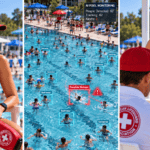
Lifeguards serve as the frontline defense against drowning and aquatic emergencies. Whether working at swimming pools, water parks, lakes, rivers, or ocean beaches, lifeguards are entrusted with protecting the lives of countless swimmers and visitors. While the public often associates lifeguarding with watching over the water from a chair, the profession requires extensive training, physical fitness, vigilance, and a wide range of rescue skills. These skills enable lifeguards to prevent incidents, recognize emergencies quickly, and respond effectively when lives are at risk.
Prevention: The Most Important Rescue Skill
The most successful rescue is the one that never becomes necessary. Prevention is the foundation of professional lifeguarding. Lifeguards continuously scan their assigned area to identify hazards, enforce safety rules, and recognize risky behaviors before they develop into emergencies.
Effective surveillance requires concentration, proper scanning techniques, and the ability to identify subtle signs of distress. Contrary to popular belief, drowning is often silent. Victims may be unable to call for help because they are focused on trying to breathe. Lifeguards must recognize warning signs such as:
- Vertical body position with little or no leg movement
- Head tilted back with mouth at water level
- Glassy or unfocused eyes
- Attempts to swim without making forward progress
- Repeated submerging and resurfacing
- Panic or unusual behavior
By identifying problems early, lifeguards can intervene before a situation escalates into a life-threatening emergency.
Water Rescue Equipment
Modern lifeguards rely on specialized rescue equipment to improve efficiency and safety during rescues. One of the most common pieces of equipment is the rescue tube, a buoyant device designed to support both the victim and the rescuer. Rescue tubes help maintain distance from panicked victims while providing flotation support.
Other commonly used rescue equipment includes:
- Rescue buoys
- Shepherd’s crooks
- Ring buoys
- Throw bags
- Rescue boards
- Backboards
- Automated External Defibrillators (AEDs)
- First aid kits
- Emergency oxygen equipment
Lifeguards are trained to use the least risky rescue option whenever possible. If a victim can be assisted without entering the water, that option is generally preferred.
Water Entries
When entering the water is necessary, lifeguards must choose the appropriate entry based on water depth, environmental conditions, and the location of the victim.
Common entry techniques include:
Stride Jump
The stride jump is often used in deep water when the rescuer must maintain visual contact with the victim. This entry allows the lifeguard to enter quickly while keeping rescue equipment positioned correctly.
Compact Jump
The compact jump is useful when entering from elevated platforms or lifeguard stands. It keeps the rescuer stable and protects against impact injuries.
Slide-In Entry
The slide-in entry is commonly used when a spinal injury may be present or when entering shallow water. It minimizes movement and disturbance.
Run-and-Swim Entry
Frequently used in open-water environments such as beaches, this entry allows lifeguards to cover large distances rapidly.
Selecting the correct entry technique helps ensure the rescuer arrives safely and efficiently.
Approaching the Victim
Once in the water, lifeguards must reach the victim quickly while maintaining awareness of changing conditions. Swimming techniques are designed to maximize speed, conserve energy, and keep rescue equipment properly positioned.
Approaching a victim requires caution. Active drowning victims may panic and instinctively grab onto a rescuer, potentially placing both individuals in danger. Lifeguards are trained to approach from a safe angle and present flotation equipment before making direct contact.
Proper approach techniques allow lifeguards to maintain control of the rescue while reducing the risk of being submerged by a struggling victim.
Active and Passive Victim Rescues
Lifeguards must quickly assess the condition of the victim and select the appropriate rescue method.
Active Victim Rescues
An active victim is conscious and struggling to remain above water. These victims often exhibit panic and may attempt to climb on top of rescuers. Lifeguards use rescue equipment to provide flotation while calming and directing the victim.
Passive Victim Rescues
A passive victim is unconscious or unable to assist in the rescue. Lifeguards must quickly secure the victim and begin removing them from the water while protecting the airway whenever possible.
Rapid assessment and proper technique are critical during passive victim rescues because oxygen deprivation can quickly become fatal.
Submerged Victim Recovery
Submerged victim rescues are among the most challenging skills lifeguards perform. These rescues require rapid identification of the victim’s location, deep-water recovery techniques, and efficient extraction from the water.
Lifeguards are trained to:
- Perform surface dives
- Locate submerged victims
- Recover victims from varying depths
- Maintain proper body positioning
- Bring victims safely to the surface
Speed is essential because every minute without oxygen significantly reduces survival rates.
Spinal Injury Management
Head, neck, and back injuries require specialized rescue procedures. These injuries may result from diving accidents, collisions, wave impacts, or slips and falls.
When a spinal injury is suspected, lifeguards must stabilize the victim’s head and neck while keeping the body aligned. Additional rescuers often assist with backboarding procedures and coordinated extrication techniques.
Improper movement can worsen an existing injury, making spinal management one of the most technically demanding rescue skills.
Teamwork and Emergency Action Plans
Lifeguarding is rarely an individual effort during a major emergency. Successful rescues often depend on teamwork and a well-practiced Emergency Action Plan (EAP).
Team members may be assigned specific responsibilities such as:
- Water rescue
- Crowd control
- EMS activation
- Equipment retrieval
- CPR and AED operation
- Documentation
Regular drills help ensure that all staff members understand their roles and can respond quickly under pressure.
CPR, AED, and Emergency Care
Rescue skills do not end when the victim is removed from the water. In many cases, emergency medical care becomes the most critical phase of the response.
Lifeguards are trained to provide:
- Cardiopulmonary Resuscitation (CPR)
- AED application and operation
- First aid
- Bleeding control
- Oxygen administration where authorized
- Care for breathing emergencies
- Management of medical incidents
Early CPR and defibrillation can dramatically improve survival rates during cardiac emergencies.
Physical Fitness and Ongoing Training
Maintaining rescue skills requires ongoing practice and physical conditioning. Lifeguards must possess the strength, endurance, and swimming ability necessary to perform demanding rescues under challenging conditions.
Regular training sessions help lifeguards maintain proficiency in:
- Swimming skills
- Rescue techniques
- Emergency care procedures
- Team communication
- Decision-making under stress
Many organizations require frequent in-service training to ensure lifeguards remain prepared for real-world emergencies.
Conclusion
Rescue skills are the foundation of professional lifeguarding and play a vital role in protecting lives in aquatic environments. From surveillance and prevention to victim recovery and emergency medical care, lifeguards must master a broad range of techniques and maintain constant readiness. Every rescue requires a combination of knowledge, physical ability, quick decision-making, and teamwork. Through comprehensive training, regular practice, and unwavering vigilance, lifeguards help create safer swimming environments and provide the rapid response needed when seconds matter most. Their dedication and expertise continue to save lives every day, making rescue skills one of the most important components of aquatic safety.