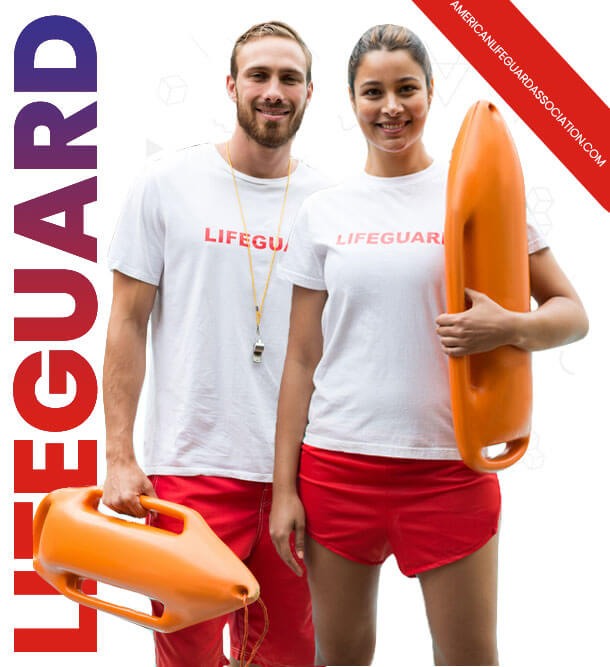
Turn your swimming ability into lifesaving skills, professional confidence and new employment opportunities with the American Lifeguard Association®.
Our American Lifeguard and Safety Training™ program combines lifeguarding, water rescue, First Aid, CPR/AED for the Professional Rescuer, emergency preparedness and injury prevention in one comprehensive certification pathway.
Whether you are preparing for your first lifeguard job, returning to aquatics after time away, or helping an organization train its staff, the American Lifeguard Association provides a flexible, accessible and affordable way to begin.
ALA states that successful participants receive certifications in Lifeguarding, CPR/AED and First Aid that are valid for two years. Its course information also states that certification records are placed in a national verification system, digital certification is provided by email, and a waterproof wallet-size card is mailed after successful completion.
The American Lifeguard Association® has provided lifeguard and health-and-safety training since 1990. ALA reports that its affiliated aquatic organizations have trained more than 250,000 individuals worldwide.
For more than three decades, the Association has supported individuals, employers, schools, universities, pools, waterparks, camps and other aquatic organizations seeking professional safety education.
More than 35 years of experience
ALA has been involved in lifeguard and aquatic safety education since 1990.
Complete certification package
The program includes Lifeguarding, CPR/AED and First Aid rather than requiring participants to purchase each core credential separately.
Flexible training access
Video instructor-led blended learning allows candidates to begin without waiting for a large scheduled group class.
Two-year certification
Successful candidates receive Lifeguarding, CPR/AED and First Aid credentials valid for two years.
National credential verification
Certification information can be maintained and verified through ALA’s national verification system.
Affordable grant-supported pricing
A limited national grant currently reduces eligible first-time lifeguard training fees.
30-day price-match protection
ALA helps protect students from paying more for comparable local training.
30-day satisfaction guarantee
Students receive additional peace of mind when enrolling.
Lifeguard certification is a professional credential earned after completing training designed to prepare a person to help prevent, recognize and respond to aquatic emergencies.
Lifeguarding involves far more than sitting in a chair and watching people swim. A professional lifeguard must be prepared to:
The U.S. Department of Labor describes lifeguard duties as including rescuing swimmers in danger, monitoring activities to prevent accidents, teaching water safety, assisting patrons and administering First Aid.
Lifeguard certification documents that the candidate has completed a defined training and testing process. Before assigning a lifeguard to active duty, an employer should also verify that the individual can perform the required skills in the specific aquatic environment where the person will work.
The American Lifeguard Association is specifically listed in the U.S. Department of Labor’s Field Operations Handbook among certifying organizations whose lifeguard certification programs satisfy the requirements addressed under 29 C.F.R. § 570.34(l).
The U.S. Department of Veterans Affairs also lists American Lifeguard Association Lifeguard Certification in VHA Directive 1040. In that directive, ALA certification appears alongside American Red Cross, YMCA and Ellis & Associates lifeguard certifications as credentials that meet and exceed the identified basic water safety and rescue competency for specified VA personnel.
These references provide meaningful support for ALA’s position as a national lifeguard training organization. However, every student should still confirm the requirements of the intended employer, aquatic facility, health department or other local authority before enrolling.
A water rescue may be only the beginning of an emergency.
After bringing someone to safety, a lifeguard may need to assess breathing, begin rescue breaths, perform CPR, operate an AED, control bleeding, manage shock or provide care until emergency medical services arrive.
That is why the ALA lifeguard certification pathway combines:
Training focuses on prevention, surveillance, victim recognition, water entry, rescue approaches, victim contact, rescue equipment, removals and emergency action plans.
CPR/AED for the Professional Rescuer
Candidates study how to recognize breathing and cardiac emergencies, provide rescue breathing, perform CPR and integrate an AED into the emergency response.
First Aid
Candidates learn how to recognize and respond to injuries and sudden illnesses that may occur in or around an aquatic environment.
This combined package helps candidates prepare for the complete progression of an aquatic emergency—from recognizing danger in the water to providing care on the deck.
The American Lifeguard Association program should be described as video instructor-led blended learning, not as an online-only lifeguard course.
Participants receive structured video instruction and digital course materials that can be reviewed according to their schedules. Candidates must also practice and be able to perform the required lifeguarding, water rescue, CPR/AED and First Aid skills.
This format offers several advantages:
ALA’s course information states that training materials remain available throughout the two-year certification period so participants can review and refresh their knowledge.
The CDC Model Aquatic Health Code defines a qualified lifeguard as someone who has completed an authority-recognized training course, holds a current certificate, has met pre-service requirements and participates in continuing in-service training. It also calls for facility-specific policies, emergency procedures and skills demonstrations before a lifeguard assumes active duty.
Not every lifeguard works in the same type of facility.
A lifeguard assigned to a shallow hotel pool may face different conditions from a lifeguard working at a deep-water municipal pool. A waterpark may have specialized attractions and operating procedures. A beach or natural waterfront may require additional swimming ability, environmental knowledge and agency-specific training.
The American Lifeguard Association offers different pathways so participants and employers can select training appropriate for the intended setting.
First-Time Professional Lifeguard Certification
This is the primary package for candidates who are becoming lifeguards for the first time and intend to work in an aquatic environment requiring full professional lifeguard preparation.
The Package Includes
Best For
ALA’s current course page states that a limited national grant reduces eligible first-time training from the regular price of $385 to $285 while grant funds remain available. Pricing and grant availability should be automatically updated on this page when the promotion changes.
Shallow water lifeguard certification is designed for candidates working in limited-depth aquatic environments.
It may be appropriate for qualifying:
Candidates still receive instruction in prevention, surveillance, water rescue, CPR/AED, First Aid and emergency response. However, the swimming and rescue prerequisites are designed around the limited-depth environment.
A shallow water certification does not authorize a person to work automatically in every pool or aquatic environment. The employer must ensure that the certification and the candidate’s demonstrated abilities are appropriate for the facility’s depth, design, equipment and operating procedures.
Lifeguards must renew their credentials and continue practicing their skills.
The ALA recertification pathway is intended for previously certified lifeguards who need to refresh their knowledge and renew Lifeguarding, CPR/AED and First Aid certification for another two-year period.
ALA’s current promotional materials advertise recertification at $185 for eligible returning lifeguards under its limited grant-supported offer. Eligibility and proof-of-prior-certification requirements should be confirmed during registration.
ALA also supports employers and organizations that need to train multiple participants.
Group training may be useful for:
Employers should combine certification training with facility-specific orientation, emergency action plan instruction, pre-service skills evaluation and continuing in-service training.
Becoming a lifeguard is more than earning a card. It means accepting the responsibility to watch over others, prevent emergencies and respond when seconds matter.
The American Lifeguard Association® provides an accessible pathway for candidates who want to develop lifesaving knowledge, earn Lifeguarding, CPR/AED and First Aid certification, and prepare for employment in the aquatic profession.
With more than 35 years of training experience, flexible video instructor-led blended learning, national credential verification, grant-supported pricing, a 30-day price-match guarantee and a 30-day satisfaction guarantee, ALA gives aspiring lifeguards a practical way to begin.
ALA also supports employers and organizations that need to train multiple participants.
Group training may be useful for:
Employers should combine certification training with facility-specific orientation, emergency action plan instruction, pre-service skills evaluation and continuing in-service training.
Prevention and Patron Surveillance
The most successful rescue is the emergency that a prepared lifeguard prevents.
Candidates study how to:
A lifeguard must remain attentive even when the pool appears calm. Emergencies can develop quickly and may not look dramatic. Effective surveillance is one of the most important responsibilities in aquatic safety.
Water Entries and Rescue Approaches
Different situations may require different entries and rescue approaches.
Course materials address concepts such as:
Candidates should practice entries and approaches in an appropriate aquatic environment before being assigned to active duty.
A person in distress may still be responsive and trying to remain above water. A passive victim may be motionless at or below the surface. Each situation requires rapid recognition and an appropriate rescue response.
Training addresses:
A person rescued from the water may not be breathing normally and may require immediate resuscitation.
Participants study:
AED Training
An automated external defibrillator can play an essential role during sudden cardiac arrest.
Candidates learn the general principles of:
First Aid
Not every emergency at an aquatic facility involves drowning.
Lifeguards may encounter cuts, falls, heat illness, allergic reactions, seizures and other injuries or sudden illnesses.
First Aid instruction may include:
Head, Neck and Spinal Injury Management
A diving incident, waterslide accident, collision or fall may cause a suspected head, neck or spinal injury.
Training addresses principles such as:
Emergency Action Plans and Lifeguard Teamwork
A lifeguard rarely responds alone.
Effective emergency response may require another lifeguard to clear the pool, retrieve emergency equipment, call 911, bring the AED, meet EMS or assist with removing and caring for the victim.
Candidates learn the importance of:
Step 1: Select the Correct Course
Choose first-time professional lifeguard certification, shallow water lifeguard certification or recertification based on your experience and intended employment setting.
Before registering, confirm that your employer or intended facility accepts the selected credential and that the course is suitable for the facility where you expect to work.
Step 2: Complete the Video Instructor-Led Training
After registration, participants receive access to video instruction, study materials and the lifeguard manual.
Review all assigned materials carefully. Do not rush through the course merely to obtain a certificate. The purpose of training is to develop knowledge and judgment that can be used during a real emergency.
Step 3: Practice the Required Skills
Participants must practice and be able to demonstrate the required:
An employer should verify practical competency in the actual aquatic environment before assigning the individual to active lifeguard duty.
Step 4: Complete the Final Examination
After studying the course materials and preparing to perform the required skills, candidates complete the final examination.
ALA’s course information states that a score of 80% or higher is required. It also states that candidates who do not pass may review the materials and retake the examination without an additional examination fee.
Step 5: Receive Your Certification
After successful completion of the required course steps:
The Lifeguarding, CPR/AED and First Aid credentials are valid for two years from the date issued.
Step 6: Complete Facility-Specific Pre-Service Evaluation
Before active duty, the employer should orient the lifeguard to the actual facility and evaluate the individual’s ability to perform the skills needed for that position.
Facility-specific preparation may include:
The CDC Model Aquatic Health Code calls for facility-specific pre-service training, demonstration of safety-team skills before active duty and documented continuing in-service training.
Lifeguard Certification Requirements
Candidates must be physically capable of completing the requirements associated with the selected course and the position for which they are applying.
Deep-water candidates should expect current prerequisites involving:
Shallow water candidates follow the current prerequisites established for the limited-depth certification pathway.
Because ALA’s currently published pages contain different descriptions of the exact swimming sequence, the website should direct candidates to one standardized, current prerequisites section maintained by the training department. Exact distances and test procedures should not differ between the informational page, checkout page, training manual and examination materials.
Candidates with medical concerns or physical limitations should consult an appropriate healthcare professional before participating in strenuous aquatic training.
How Old Do You Have to Be to Become a Lifeguard?
The current ALA first-time course information identifies 15 years of age as the minimum age for its professional lifeguard course.
Federal youth-employment guidance permits properly trained and certified 15-year-olds to work as lifeguards at traditional swimming pools and most water amusement park facilities, subject to applicable restrictions on duties and hours.
Federal guidance generally requires lifeguards to be at least 16 years old for natural-environment facilities such as rivers, lakes, reservoirs, piers and oceanside beaches. State laws, local rules and employer policies may impose additional or more restrictive requirements.
Participants should always verify:
Lifeguard Job Opportunities
Lifeguard certification can help qualify a candidate to apply for positions in a wide range of aquatic settings.
Potential employers include:
Positions may include:
Certification does not guarantee employment. Each employer determines its own hiring standards, swimming tests, facility orientation, background requirements and skills evaluations.
Natural waterfront and beach positions commonly require additional open-water, surf, ocean, rescue-board, physical-fitness or agency-specific qualifications beyond a general pool lifeguard credential.
Why Lifeguarding Is a Great First Job
For many teenagers and college students, lifeguarding is an opportunity to earn income while developing meaningful professional skills.
Lifeguards learn how to:
These abilities can be useful far beyond the swimming pool. Lifeguarding can provide a foundation for careers in recreation, education, public safety, healthcare, emergency services, hospitality, facility management and aquatics.
Why Employers Value American Lifeguard Association Certification
Employers need more than a paper certificate. They need lifeguards who understand prevention, recognize danger and can perform under pressure.
ALA training is designed to establish a foundation in:
Employers can also use the national verification system to review certification records. A verified credential helps support the hiring and recordkeeping process, while employer-based evaluation confirms that the individual is ready for the specific facility.
Affordable Lifeguard Certification
Limited National Grant
The American Lifeguard Association has announced a limited national grant that reduces eligible first-time lifeguard training fees by $100.
The current advertised price is:
Course option | Current grant-supported price |
First-time lifeguard certification | $285 |
Eligible lifeguard recertification | $185 |
Shallow water first-time certification | $285 |
Eligible shallow water recertification | $185 |
Grant funds are limited, and prices can change. The live checkout page should always be treated as the controlling source for current pricing and eligibility.
30-Day Price-Match Guarantee
The American Lifeguard Association wants participants to feel confident that they are receiving strong value.
When a participant finds an eligible lower published price for comparable training, ALA’s price-match policy allows the person to submit the qualifying offer for review within the applicable 30-day period.
The lower price must be verifiable and must meet the terms of the price-match policy. Employment-based arrangements, unverified offers and courses that are not comparable may be excluded.
30-Day Satisfaction Guarantee
ALA also offers a 30-day money-back satisfaction guarantee on its national certification programs.
This means students can enroll with greater confidence, knowing that they may request a refund under the published guarantee terms if the training does not meet their expectations.
Becoming a lifeguard is more than earning a card. It means accepting the responsibility to watch over others, prevent emergencies and respond when seconds matter.
The American Lifeguard Association® provides an accessible pathway for candidates who want to develop lifesaving knowledge, earn Lifeguarding, CPR/AED and First Aid certification, and prepare for employment in the aquatic profession.
With more than 35 years of training experience, flexible video instructor-led blended learning, national credential verification, grant-supported pricing, a 30-day price-match guarantee and a 30-day satisfaction guarantee, ALA gives aspiring lifeguards a practical way to begin.
The U.S. Department of Labor’s Field Operations Handbook lists the American Lifeguard Association among organizations whose certification programs satisfy the requirements addressed under 29 C.F.R. § 570.34(l). The Department of Veterans Affairs also lists ALA Lifeguard Certification in VHA Directive 1040 among specified lifeguard credentials. Participants should nevertheless confirm acceptance with their employer, facility and applicable local authority. (Department of Labor)
No. The program should be described as video instructor-led blended learning. Candidates complete structured academic instruction through videos and online materials, but they must also practice and be capable of demonstrating practical lifeguarding, swimming, rescue, CPR/AED and First Aid skills.
Upon successful completion, participants receive certification in Lifeguarding, CPR/AED and First Aid.
ALA Lifeguarding, CPR/AED and First Aid certification is valid for two years from the date issued.
ALA states that successful completion records are placed in the national verification system and digital certification is sent by email the same day the required course process is completed. A waterproof wallet-size card is mailed afterward.
ALA offers a recertification pathway for qualifying previously certified lifeguards. Candidates should provide the requested proof of prior certification and confirm eligibility before registering.
ALA’s video instructor-led blended format allows candidates to begin without waiting for a large scheduled group class. Completion time depends on the candidate’s schedule, preparation, skills practice and successful completion of all required steps.
No certification organization can guarantee employment. Certification can help make you eligible to apply, but the employer controls hiring, acceptance, skills testing, facility orientation and job placement.
A score of 80% or higher is required. ALA’s current program information states that candidates may review the materials and retake the exam if necessary without an additional examination fee.
Deep-water lifeguard candidates must meet the current swimming, treading-water and timed retrieval prerequisites. Candidates who intend to work only at qualifying limited-depth facilities may be able to pursue shallow water lifeguard certification.
The current ALA professional course identifies 15 as the minimum age. Federal rules allow properly certified 15-year-olds to work at traditional pools and most water amusement parks under applicable restrictions. Natural-environment positions generally require a minimum age of 16 under federal youth-employment guidance. (Department of Labor)
Yes. The ALA package includes Lifeguarding, CPR/AED for the Professional Rescuer and First Aid.
Yes. ALA places certification records in a national verification system that allows qualifying employers and officials to verify credentials.
Yes. Employers should verify that a lifeguard can perform the skills required for the specific facility and position. Facility-specific orientation, pre-service evaluation and continuing in-service training are important parts of professional readiness.
Beach and natural-water positions frequently require additional qualifications, greater swimming ability, open-water or surf rescue training and agency-specific testing. Federal youth-employment guidance generally requires natural-environment lifeguards to be at least 16. Confirm all requirements with the beach patrol or employer before registering.
The American Lifeguard Association has been approved for the Capital One Affiliate Program! for Tuition Assistance Loan
To stay updated with our special offers, subscribe to our weekly newsletter. We will not share your information with any third party.
8300 Boone Blvd 5th Floor Vienna, VA 22182
703-761-6750
Media Contact
703-856-8901
alalifeguard@aol.com