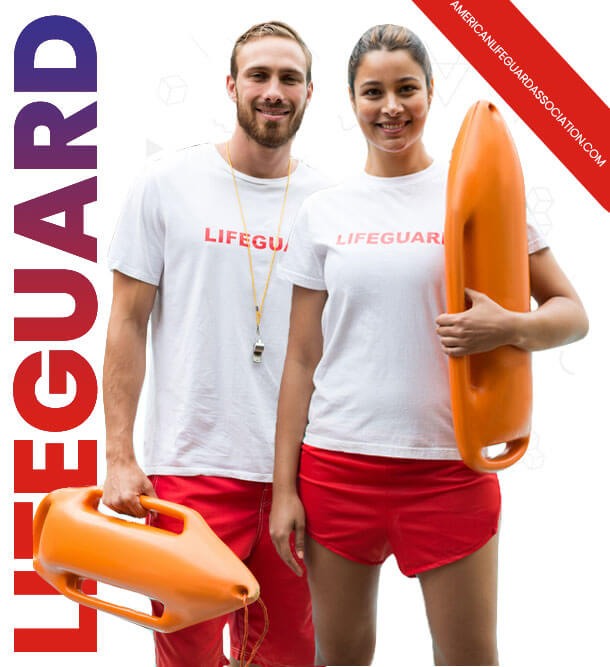
We have compliance rules, policies and strategies for our members.
That has the ability to adjust to customers’ needs and demands.
At American Lifeguard™ we have highly professional, experienced and award winning trainers & instructors.
Begin your journey toward becoming a trained and certified lifeguard with the American Lifeguard Association®.
Our first-time lifeguard training and certification program is designed for students and adults who have never been certified as lifeguards and want to begin preparing for employment at swimming pools, waterparks, schools, camps, hotels, resorts, fitness centers, community aquatic facilities, and other supervised swimming environments.
Through our video instructor-led blended learning program, you can begin the academic portion of your lifeguard course without waiting for a traditional group class. You will study water safety, drowning prevention, patron surveillance, victim recognition, rescue skills, CPR/AED, First Aid, emergency response, and the professional responsibilities of a lifeguard.
Participants who successfully complete the program receive two-year certifications in Lifeguarding, First Aid, and CPR/AED for the Professional Rescuer. The current grant price is $285, reduced from the regular price of $385 while grant funds remain available.
Course highlights:
Your First Step Toward Becoming a Lifeguard
Your first lifeguard certification is more than a credential for a summer job. Lifeguards are entrusted with the safety of children, families, competitive swimmers, recreational swimmers, and other members of the public.
A professional lifeguard must be prepared to prevent emergencies, recognize swimmers who are in distress, perform an appropriate water rescue, provide CPR/AED and First Aid, activate an Emergency Action Plan, communicate with other members of the safety team, and remain focused throughout every surveillance assignment.
The American Lifeguard Association® first-time program introduces entry-level candidates to the knowledge, decision-making, and emergency-response skills required in the aquatics and water-safety profession.
This course may be right for you when:
Previously certified lifeguards should review the separate lifeguard recertification program before registering for the first-time course.
What You Receive With First-Time Lifeguard Certification
Successful participants receive certifications in:
Lifeguarding
Lifeguard training prepares participants to help prevent aquatic emergencies, recognize swimmers in distress, use rescue equipment, perform appropriate water rescues, remove victims from the water, and assist with emergency response.
CPR/AED for the Professional Rescuer
Participants study how to assess breathing and cardiac emergencies, provide rescue breathing and CPR, use an automated external defibrillator, respond to choking, and work as part of a two-rescuer team.
First Aid
First Aid instruction prepares participants to recognize and respond to injuries and sudden illnesses that may occur in and around an aquatic facility.
The certifications are valid for two years. After successful completion, the participant’s training record is placed in the national verification system so employers and health department officials can review the credential. A digital certification is provided electronically, and an additional waterproof wallet-size certification card is mailed on the following business day.
How the First-Time Lifeguard Program Works
You do not need to wait for a traditional group class date. Once registration is completed, you receive access to the video-led training materials and lifeguard manual so you can begin the academic portion of the program.
The course materials introduce the principles and procedures associated with:
Candidates should carefully review the materials rather than rushing through the course. The purpose of the training is not simply to pass an examination. It is to understand the responsibilities involved in preventing and responding to aquatic emergencies.
Lifeguarding is a physical profession. It cannot be learned only by reading a manual or watching a video.
Participants must practice and be capable of demonstrating the required swimming, rescue, CPR/AED, First Aid, and emergency-response skills both in and out of the water. This includes preparing for the swimming prerequisites, practicing with appropriate rescue equipment, and developing the ability to perform skills safely and confidently.
After reviewing the training materials and preparing to perform the required skills, participants complete the online final examination.
A score of 80% or higher is required. Candidates who do not pass on their first attempt may review the course materials and retake the examination at no additional charge. The exam must be completed in one sitting.
After successful completion, participants receive certification in Lifeguarding, CPR/AED, and First Aid. The certifications are valid for two years.
Certification documents completion of the training program. It does not eliminate the need for facility-specific practical evaluation, orientation, and continuing skills practice.
Before being assigned to lifeguard duty, your employer should evaluate your skills in the aquatic environment where you will work.
The CDC Model Aquatic Health Code describes a qualified lifeguard as a person who has completed an authority-recognized lifeguard training course, holds a current certificate, has met the facility’s pre-service requirements, and participates in continuing in-service training.
Your employer’s pre-service evaluation may include:
Certification provides the training foundation. Your employer confirms that you are prepared for the particular facility where you will serve.
First-Time Lifeguard Course Prerequisites
First-time lifeguard candidates must be prepared for the physical requirements of the course.
Minimum Age
Participants must be at least 15 years old to complete the Lifeguarding course.
Federal youth-employment rules permit properly trained and certified 15-year-olds to perform certain lifeguard duties at traditional swimming pools and most water amusement parks. Workers under age 16 may not perform lifeguard duties at natural environments such as oceans, lakes, rivers, and similar waterfront settings.
Swim-Tread-Swim Sequence
For the current deep-water first-time program, participants must be able to complete the following sequence without stopping to rest:
Swimming on the back or side is not permitted during this sequence. Goggles may be used for the swimming portion.
Timed Brick Test
Participants must also complete the following timed event within one minute and 40 seconds:
Goggles are not permitted during the timed brick test.
Not Ready for the Deep-Water Requirements?
Candidates who cannot yet meet the deep-water swimming prerequisites may be better suited for the shallow-water lifeguard training program.
Shallow-water training is intended for qualified candidates who will work in aquatic environments with limited water depths. The intended employer should always be consulted before selecting a shallow-water or deep-water certification.
Water Safety and Drowning Prevention
The first responsibility of a lifeguard is prevention.
First-time candidates learn how to identify hazards, recognize unsafe conduct, understand the causes of common aquatic injuries, communicate safety rules, and intervene before a dangerous situation becomes an emergency.
Prevention skills include:
Patron Surveillance and Victim Recognition
Drowning is often quiet. A swimmer in danger may not be able to wave, shout, or call for help.
Lifeguards must learn to distinguish between normal swimming behavior, a distressed swimmer, an active drowning victim, a passive victim, and an unresponsive person.
The program introduces candidates to:
Water Rescue Skills
Participants study a range of rescue skills that may be needed in swimming pools and other supervised aquatic environments.
Training areas include:
The appropriate rescue depends on the victim’s condition, water depth, facility layout, available equipment, and Emergency Action Plan.
Head, Neck, and Back Injury Management
Some aquatic emergencies involve a possible injury to the head, neck, or spine. Candidates study techniques intended to minimize unnecessary movement while supporting the victim and coordinating removal from the water.
Training may include:
These skills require practice and coordinated teamwork.
CPR/AED for Adults, Children, and Infants
Lifeguards may be the first trained responders available when a swimmer experiences a breathing or cardiac emergency.
CPR/AED instruction includes:
First Aid for Aquatic Facilities
Lifeguards frequently respond to incidents that do not require an in-water rescue. These may include falls, cuts, bleeding, heat-related illness, allergic reactions, suspected fractures, or sudden illness.
First Aid instruction includes:
Emergency Action Plans and Team Response
An Emergency Action Plan establishes how the facility’s staff will respond when an emergency occurs.
First-time lifeguards need to understand:
Your employer will teach you the specific Emergency Action Plan for your workplace during orientation and pre-service training.
Professional Lifeguard Responsibilities
A lifeguard must be dependable, alert, respectful, physically prepared, and ready to act.
Professional responsibilities include:
Video Instructor-Led Blended Lifeguard Training
The American Lifeguard Association describes this program as video instructor-led blended learning, not as an online-only lifeguard course.
The academic portion provides flexibility for candidates who cannot wait for a scheduled group class. Participants can review instructor-led videos and course materials at their own pace and revisit difficult topics when additional study is needed.
However, lifeguarding requires physical skills. Candidates must practice the required skills, and practical competency must be evaluated in the aquatic environment before the lifeguard begins working on duty.
The CDC Model Aquatic Health Code requires facility-specific pre-service skill competency and continued in-service training. This structure combines formal certification with practical preparation for the actual workplace.
Why Choose the American Lifeguard Association?
More Than 35 Years of Aquatic Safety Education
The American Lifeguard Association has provided lifeguard, water-safety, CPR/AED, and First Aid education since 1990.
ALA works with individuals, employers, schools, camps, recreation programs, hotels, resorts, aquatic facilities, and community organizations seeking flexible approaches to lifesaving education.
Listed in U.S. Department of Labor Guidance
The U.S. Department of Labor’s Field Operations Handbook lists the American Lifeguard Association among organizations whose lifeguard certification programs are similar to those offered by the American Red Cross and therefore satisfy the certification requirements addressed in 29 CFR §570.34(l).
This federal guidance is particularly relevant to youth-employment provisions governing lifeguard duties.
Included in Veterans Health Administration Directive 1040
The Department of Veterans Affairs’ April 16, 2025 VHA Directive 1040 lists American Lifeguard Association Lifeguard Certification among the certification options identified for therapeutic and recreational swimming-pool staff.
Three Certifications in One Program
Successful candidates receive:
The certifications are valid for two years.
National Credential Verification
Certification records are entered into a national verification system, helping employers and health department officials confirm that a participant’s credential is current and valid.
Begin Without Waiting for a Group Class
The blended format allows first-time candidates to begin the academic portion of their training after registration rather than waiting weeks for a scheduled local class.
Exam Retakes at No Additional Cost
Candidates who do not earn the required 80% score on the first examination attempt may review the materials and retake the exam without paying an additional exam fee.
Current First-Time Lifeguard Course Price
Save $100 Through the 2026 National Grant
The regular first-time lifeguard training price is $385.
Through currently available 2026 national grant funding, the registration fee has been reduced by $100 to:
$285
The price includes training and certification in:
Grant funds are limited and may no longer be available once the allocated funding has been exhausted.
The American Lifeguard Association monitors comparable lifeguard training programs to help keep course prices competitive.
When a participant finds a qualifying lower price within 30 days of registration, ALA will match the lower price, subject to the published terms of the guarantee.
The competing course must generally:
Requests must be submitted within 30 days of the original registration.
30-Day Satisfaction Guarantee
Your satisfaction is important.
When the program does not meet your expectations, you may request a refund within 30 days of your original registration in accordance with the published satisfaction-guarantee terms.
Requests should be submitted by email before the 30-day period expires.
Prepare for Your First Lifeguard Course
Candidates who prepare before beginning the course are more likely to feel confident during swimming and rescue-skill practice.
Before registering or completing your evaluation:
Candidates who are uncertain about their swimming ability should speak with a swim instructor, aquatic supervisor, or prospective employer before attempting the prerequisites.
First-time lifeguard certification can help prepare candidates to apply for positions at:
Different environments require different skills. A certification intended for a traditional swimming pool does not automatically qualify someone for every ocean, beach, lake, surf, or open-water position.
Before enrolling, ask the prospective employer:
Becoming a lifeguard begins with preparation.
Your first lifeguard course will introduce you to water safety, surveillance, drowning prevention, rescue skills, CPR/AED, First Aid, Emergency Action Plans, teamwork, and professional responsibility.
Through the American Lifeguard Association’s video instructor-led blended learning program, you can begin your academic training without waiting for a traditional group class and progress through the materials at your own pace.
Take the first step toward a meaningful job in aquatics, recreation, public safety, or emergency response.
Participants must be at least 15 years old to complete the Lifeguarding course. Employment requirements may vary. Federal rules permit certain properly certified 15-year-olds to work at traditional pools and most water amusement parks, while natural-environment lifeguarding generally requires a minimum age of 16. (U.S. Department of Labor)
The academic instruction and final examination are available through video instructor-led blended learning. Lifeguarding is not an online-only skill. Participants must practice and be able to demonstrate the required swimming, rescue, CPR/AED, First Aid, and emergency-response skills. The employer must confirm facility-specific practical competency before the participant begins lifeguard duty. (AmericanLifeguardUSA)
A score of at least 80% is required. Candidates who do not pass may review the course materials and retake the examination at no additional cost. (AmericanLifeguardUSA)
After successful completion, the participant receives a digital certification and an electronic confirmation and the certification record is entered into the national verification system.
Under the Fair Labor Standards Act, the U.S. Department of Labor is the federal authority responsible for administering these employment standards. ALA certification is used throughout the United States, including all 50 states, the District of Columbia, U.S. territories, and public and federally operated aquatic facilities.
After certification, your employer should complete a pre-service skills evaluation and facility orientation. You should learn the facility’s Emergency Action Plan, surveillance zones, rescue equipment, communication procedures, and team-response system. You must then participate in ongoing in-service training and skills practice.
Candidates who have previously held a nationally recognized lifeguard certification may qualify for the separate lifeguard recertification course. First-time training is intended primarily for candidates who have not previously been certified or who need to complete the complete entry-level program.
The current grant price is $285, reduced from the regular price of $385 while grant funding remains available. The fee includes Lifeguarding, First Aid, and CPR/AED training and certification.
The American Lifeguard Association has been approved for the Capital One Affiliate Program! for Tuition Assistance Loan