Water Safety Awareness Begins Before Anyone Enters the Water
Water safety awareness is one of the most important public safety messages families can hear before summer, holidays, vacations, pool parties, beach trips, and community swim events. Every year, families gather around pools, lakes, rivers, beaches, water parks, and backyard swimming areas expecting fun, relaxation, and memories. But water can become dangerous in seconds when supervision, preparation, and safety planning are not treated as priorities.
The American Lifeguard Association reminds parents, caregivers, swimmers, and facility operators that drowning prevention begins before an emergency happens. Water safety awareness is not just about knowing how to swim. It is about understanding risk, preparing for emergencies, assigning responsible supervision, choosing safer swimming locations, using proper life jackets, and respecting the water at all times.
According to the CDC, more children ages 1 to 4 die from drowning than from any other cause, and drowning is the second leading cause of unintentional injury death for children ages 5 to 14. The CDC also reports that more than 4,000 unintentional drowning deaths occur each year in the United States. These facts show why water safety awareness must be repeated often, especially during peak swimming season.
Why Water Safety Awareness Matters
Drowning is often fast, quiet, and preventable. Unlike what many people imagine, a person in distress may not be able to wave, yell, or call for help. A child can slip under the water silently while adults are nearby but distracted. This is why water safety awareness must focus on active prevention, not just emergency response.
Many drowning incidents happen during ordinary moments: a family barbecue, a hotel pool visit, a birthday party, a boating trip, or a quick walk near a pond or backyard pool. Adults may believe someone else is watching, but when everyone assumes another person is responsible, no one may truly be watching.
That is why one of the most important rules in water safety is simple: if everyone is watching, nobody is watching.
Active supervision means one responsible adult is specifically assigned to watch the water without distractions. This person should not be texting, checking email, drinking alcohol, preparing food, talking casually, or turning away. Their only job is to watch swimmers and respond quickly if something changes.
Assign a Water Watcher
A Water Watcher is a responsible adult assigned to actively supervise children and inexperienced swimmers for a set period of time. This is one of the simplest and most effective water safety awareness practices a family can use.
The Water Watcher should remain close enough to act quickly, especially when supervising young children or novice swimmers. For infants, toddlers, and weak swimmers, parents and caregivers should remain within arm’s reach. The Water Watcher should avoid phones, alcohol, side conversations, reading, and any activity that takes attention away from the water.
After a set period of time, another responsible adult can take over. This rotation helps keep supervision fresh and focused. At pool parties and large gatherings, this system is especially important because distractions are everywhere. Music, food, guests, conversations, and other activities can easily draw attention away from the pool.
Families should make the Water Watcher role clear before children enter the water. Do not assume that another adult is paying attention. Say clearly who is watching, when their watch begins, and when another adult takes over.
Swim Near a Lifeguard Whenever Possible
One of the strongest water safety awareness messages is to swim near a lifeguard whenever possible. Lifeguards are trained to recognize distress, respond to emergencies, enforce safety rules, and provide a safer aquatic environment.
Swimming at a guarded beach, pool, lakefront, or aquatic facility adds an important layer of protection. However, lifeguards do not replace parental supervision. Parents and caregivers must still actively watch their children, follow facility rules, and remain alert.
Before swimming, families should check posted signs, warning flags, weather conditions, water depth, currents, and facility rules. At beaches, swimmers should be aware of rip currents, waves, sudden drop-offs, and changing surf conditions. At lakes and rivers, swimmers should consider water clarity, underwater hazards, currents, and boat traffic. At pools, parents should know where the deep end begins, whether diving is allowed, and where rescue equipment is located.
The best water safety plan combines trained lifeguards, active adult supervision, swimming ability, proper safety equipment, and emergency readiness.
Life Jackets Save Lives
Proper life jacket use is another key part of water safety awareness. Children who are novice swimmers should wear a properly fitted, U.S. Coast Guard-approved life jacket when in or around open water, pools, lakes, beaches, boats, or other aquatic environments.
A life jacket should match the child’s size, weight, and activity. It should be properly fastened and snug enough that it does not slip over the child’s chin or ears. Parents should check the label and follow the manufacturer’s instructions.
The U.S. Coast Guard explains that the best approved life jacket is the one a person will actually wear, and some life jackets are designed to help keep the wearer’s head above water and support breathing position. The Coast Guard also notes that children should learn how to wear a personal flotation device properly and become comfortable using it in the water.
Families should not confuse pool toys with lifesaving devices. Inflatable arm bands, pool noodles, rafts, and toys are not substitutes for a U.S. Coast Guard-approved life jacket. They can deflate, slip off, or create a false sense of security.
Life jackets are an added layer of protection, but they do not replace adult supervision. A child wearing a life jacket still needs a responsible adult watching closely.
Swimming Lessons Are Essential, But They Are Not Enough
Learning to swim is one of the most important steps in drowning prevention. Children and adults should learn basic water competency skills, including how to enter and exit the water safely, float, tread water, roll over, breathe, and swim to safety.
The American Lifeguard Association encourages families to make swim lessons a priority and supports the broader message: Learn to Swim America. Swimming is not only a recreational skill; it is a life skill.
However, swimming ability alone does not eliminate risk. Even strong swimmers can become tired, injured, trapped, disoriented, or caught in unexpected conditions. A confident swimmer can struggle in cold water, rough surf, strong currents, deep water, or crowded aquatic environments.
That is why water safety awareness must include multiple layers of protection: swim lessons, supervision, life jackets when appropriate, swimming near lifeguards, CPR awareness, and safe facility practices.
Parents Should Stay Within Arm’s Reach of Young Children
For young children and inexperienced swimmers, close supervision means being within arm’s reach. This is sometimes called “touch supervision.” It allows a parent or caregiver to respond immediately if a child slips, falls, swallows water, panics, or begins to struggle.
Parents should be especially careful around backyard pools, hotel pools, apartment pools, bathtubs, ponds, fountains, and any standing water. Drowning can occur in surprisingly small amounts of water, particularly for toddlers.
Families with home pools should also use physical barriers, including proper fencing, self-closing and self-latching gates, pool covers where appropriate, alarms, and secured access points. Doors leading to pool areas should remain locked when the pool is not in use.
Water safety awareness is not only for public beaches and large pools. It begins at home.
Dress Children in Bright-Colored Swimsuits
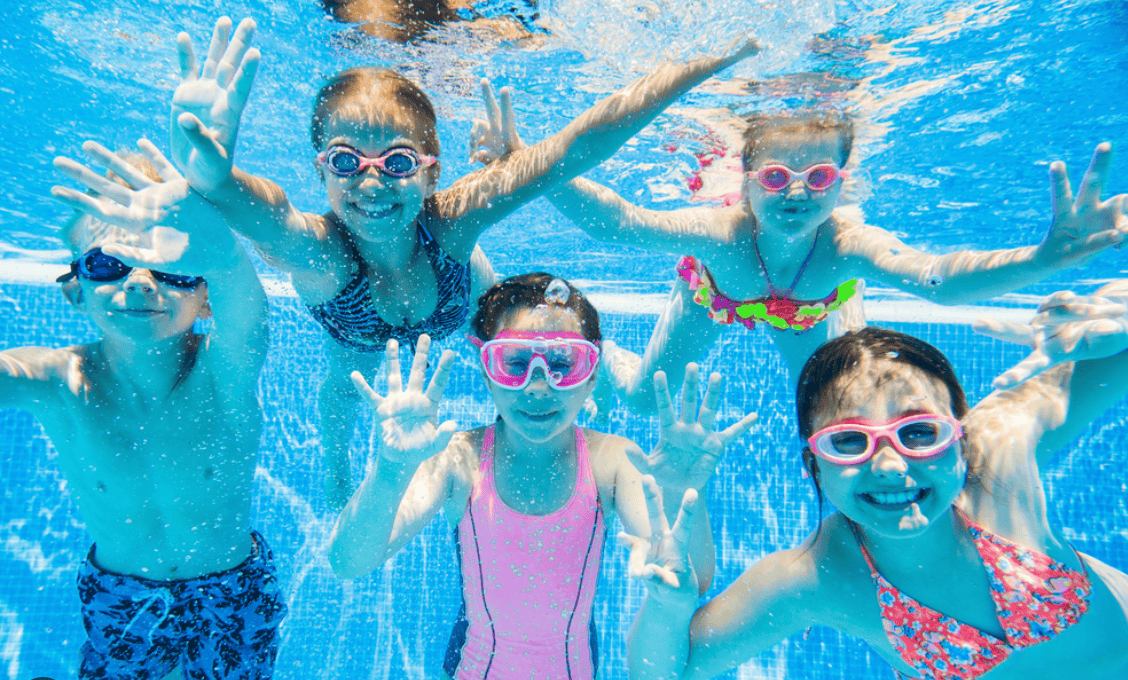
A simple but often overlooked water safety tip is to dress children in bright-colored swimsuits. Highly visible colors can make it easier for adults and lifeguards to spot a child in the water, especially in crowded pools, lakes, beaches, or water parks.
Dark, blue, white, gray, or water-colored swimsuits may be harder to see depending on the pool surface, sunlight, shadows, waves, or water clarity. Bright colors such as neon orange, bright pink, lime green, or other highly visible shades may help a child stand out.
This step does not replace supervision, but it can support faster recognition if a child is underwater, separated from a group, or harder to see in a busy environment.
Water Safety for Pool Parties and Group Events
Pool parties require special attention because they create a high-distraction environment. Parents may be socializing, eating, taking photos, preparing food, or assuming other adults are watching. Children may be excited, loud, and moving quickly in and around the pool.
For birthday parties, family gatherings, community events, and private pool rentals, hiring a certified lifeguard is a smart safety decision. A lifeguard adds focused attention and emergency response training to the event.
Before the event, the host should provide the lifeguard with important information, including the number of swimmers, ages of children, swimming abilities, pool depth, diving rules, rescue equipment location, and any special concerns. Even with a lifeguard present, parents should still actively supervise their own children.
Pool rules should be stated clearly before swimming begins. These may include no running, no pushing, no diving in shallow water, no breath-holding games, no swimming alone, and no entering the water without permission.
Adults Should Learn CPR
CPR training is another important part of water safety awareness. In a drowning emergency, seconds matter. Immediate CPR can make a major difference while emergency medical services are on the way.
Parents, caregivers, coaches, teachers, camp staff, pool owners, boaters, and anyone who supervises children around water should consider CPR and first aid training. Emergency preparedness should include knowing how to call 911, where rescue equipment is located, and how to respond without placing additional people in danger.
Families should also keep a phone nearby when supervising water activities, but the phone should be used for emergencies—not as a distraction.
Know Before You Go
The American Lifeguard Association encourages families to “Know Before You Go.” This means checking the aquatic environment before swimming. Is a lifeguard present? Are warning signs posted? Is the water clear? Is the weather changing? Are there currents, waves, or underwater hazards? Is rescue equipment available? Are children properly supervised?
At beaches, families should check surf conditions and swim only in designated areas. At lakes and rivers, swimmers should be careful of currents, uneven bottoms, hidden debris, and sudden depth changes. On boats, everyone should wear appropriate life jackets. Around pools, families should follow posted rules and avoid unsafe behavior.
Water safety awareness is about forming habits. The goal is not to make families afraid of the water. The goal is to help them enjoy the water with preparation, confidence, and respect.
Water Safety Is a Shared Responsibility
Drowning prevention is not the responsibility of one person alone. Parents, caregivers, lifeguards, schools, camps, pool operators, aquatic facilities, community leaders, and public health organizations all play a role.
Parents must supervise. Children should learn to swim. Facilities should maintain safe environments. Lifeguards should be properly trained. Communities should promote water safety education. Adults should learn CPR. Boaters should wear life jackets. Families should assign Water Watchers. Everyone should take drowning prevention seriously.
The American Lifeguard Association’s broader mission includes promoting safer aquatic environments, supporting lifeguard training, encouraging swim education, and increasing public awareness about drowning prevention. Water safety awareness is part of a larger public safety effort that protects children, families, and communities.
Final Water Safety Awareness Checklist
Before the next pool day, beach trip, lake outing, or backyard swim event, families should remember these essential water safety awareness tips:
- Assign a responsible Water Watcher.
- Stay within arm’s reach of young children and novice swimmers.
- Swim near a lifeguard whenever possible.
- Use properly fitted, U.S. Coast Guard-approved life jackets when appropriate.
- Enroll children and adults in swim lessons.
- Dress children in bright-colored swimsuits.
- Avoid distractions, especially phones, while supervising.
- Follow posted rules and warning signs.
- Check weather, water depth, currents, and local conditions.
- Learn CPR and know how to respond in an emergency.
- Never allow children to swim alone.
Water should be a place of enjoyment, exercise, learning, and family connection. With strong water safety awareness, many tragedies can be prevented before they happen.
Be alert. Be prepared. Assign a Water Watcher. Swim near a lifeguard. Learn to swim. Wear a proper life jacket when needed. Respect the water every time.