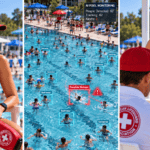
For decades, lifeguards have quietly stood as the first line of defense against drowning and aquatic emergencies. Whether responding to a swimmer caught in a rip current, administering CPR after a cardiac emergency, or coordinating emergency action plans during a mass rescue, lifeguards have consistently performed the duties of first responders.
Now, the State of New Jersey has officially recognized that reality.
With the passage of Senate Resolution 72 (SR72) on June 30, 2026, New Jersey formally recognizes open water lifeguards as first responders and emergency services providers. The resolution represents a landmark moment not only for New Jersey’s beaches but also for the entire lifeguarding profession across the United States.
For the American Lifeguard Association (ALA), this legislation validates what lifeguard professionals, emergency physicians, and aquatic employers have understood for many years: lifeguards are emergency responders whose work saves lives every day.
A Historic Victory for Open Water Lifeguards
Senate Resolution 72 passed the New Jersey Senate by voice vote and recognizes that open water lifeguards routinely perform emergency response functions that place them among the nation’s first responders.
The resolution acknowledges that lifeguards are often:
- The first trained professional to arrive at an aquatic emergency.
- Responsible for initiating lifesaving rescues.
- Providers of emergency medical care before EMS arrives.
- Coordinators of emergency response procedures.
- Critical members of the public safety system.
For thousands of lifeguards serving beaches throughout New Jersey, the resolution provides long-overdue recognition of the responsibilities they shoulder every day during the summer season.
Lifeguards Have Always Been First Responders
The American Lifeguard Association and the American Red Cross Lifeguarding Program prepares lifeguards and has always treated lifeguards as first responders.
Long before state legislatures began formally recognizing this role, professional lifeguard training focused on emergency response skills that mirror those expected of other first responders.
Today’s certified lifeguards are trained to:
- Prevent emergencies through constant surveillance.
- Recognize distressed swimmers before they become victims.
- Perform water rescues in challenging environments.
- Administer CPR.
- Use Automated External Defibrillators (AEDs).
- Provide first aid.
- Administer emergency oxygen where available.
- Manage suspected spinal injuries.
- Activate Emergency Action Plans (EAPs).
- Coordinate with Emergency Medical Services (EMS), firefighters, and law enforcement.
These responsibilities extend far beyond simply supervising swimmers.
Every rescue requires rapid assessment, decisive action, teamwork, communication, and medical intervention—hallmarks of professional emergency response.
Why Open Water Lifeguards Face Unique Challenges
While all lifeguards perform critical safety functions, open water lifeguards operate in some of the most unpredictable environments imaginable.
Unlike swimming pools, beaches and open water environments constantly change.
Hazards include:
- Rip currents
- Large surf
- Changing tides
- Strong winds
- Lightning
- Marine life
- Boat traffic
- Heat-related illnesses
- Missing swimmers
- Large crowds
- Unpredictable weather
Every emergency requires split-second decisions that can determine whether a victim survives.
Many times, lifeguards reach victims several minutes before police officers, firefighters, or EMS personnel arrive.
In drowning emergencies, those minutes often make the difference between life and death.

Drowning Prevention Begins Before the Rescue
One of the most overlooked aspects of professional lifeguarding is that most successful rescues begin long before anyone enters the water.
Professional lifeguards continually:
- Monitor swimmer behavior.
- Identify hazards.
- Enforce safety rules.
- Educate the public.
- Recognize developing emergencies.
- Intervene before dangerous situations escalate.
This proactive approach dramatically reduces drowning incidents.
When prevention fails, lifeguards transition immediately into emergency response mode.
The Importance of Professional Lifeguard Training
Recognition as first responders reinforces the importance of high-quality lifeguard certification and ongoing professional development.
The American Lifeguard Association has long emphasized that certification is only one component of a comprehensive aquatic safety program.
Effective drowning prevention requires:
- Nationally recognized lifeguard certification.
- Comprehensive emergency action plans.
- Documented practical competency evaluations.
- Employer-based pre-service skills assessments.
- Regular in-service training.
- Continuous surveillance training.
- Ongoing emergency drills.
Practical competency is addressed within the aquatics environment through employer-based pre-service evaluations and ongoing in-service procedures established to meet the CDC Model Aquatic Health Code (MAHC) requirements. These employer responsibilities are national standards supported by the CDC and help ensure that certified lifeguards maintain the skills necessary to respond effectively in real-world emergencies.
Preparedness is not achieved through certification alone—it depends on continual training, teamwork, and operational readiness.
Honoring Those Who Made the Ultimate Sacrifice
Senate Resolution 72 also honors the memory of Norman Inferrera and Keith Pinto, New Jersey lifeguards who lost their lives in the line of duty in 2021.
Their sacrifice serves as a powerful reminder that lifeguarding carries genuine occupational risk.
Every summer, lifeguards willingly enter dangerous surf conditions to rescue complete strangers.
Few professions require individuals to repeatedly place themselves in hazardous environments solely to protect others.
Recognizing that sacrifice is an important step toward giving lifeguards the respect their profession deserves.
Recognition Can Strengthen Recruitment
Communities throughout America continue facing a nationwide lifeguard shortage.
Many aquatic facilities have struggled to:
- Hire enough qualified staff.
- Keep beaches fully operational.
- Maintain safe swimmer-to-lifeguard ratios.
- Extend operating hours.
- Open all swimming areas.
Recognizing lifeguards as first responders helps elevate the profession.
Young people considering careers in public safety often seek meaningful work that makes a difference.
Official recognition communicates that lifeguarding is not simply a seasonal summer job—it is an opportunity to protect lives while developing valuable emergency response skills.
This increased professional recognition may improve recruitment, retention, and public appreciation of the profession.
A Model Other States Should Consider
New Jersey’s action could become a model for legislatures across the United States.
The responsibilities performed by lifeguards in California, Florida, Virginia, Hawaii, Texas, the Great Lakes region, and countless inland beaches closely resemble those performed in New Jersey.
Wherever aquatic emergencies occur, lifeguards are frequently:
- First on the scene.
- First to make patient contact.
- First to begin lifesaving interventions.
- First to coordinate emergency care.
Recognizing these responsibilities through legislation helps ensure that policies accurately reflect the realities of modern aquatic safety.
The Future of Lifeguarding
As aquatic environments become increasingly complex, the role of professional lifeguards continues to expand.
Modern lifeguards are expected to combine:
- Advanced surveillance skills.
- Rescue expertise.
- Emergency medical knowledge.
- Public education.
- Risk management.
- Team coordination.
- Leadership during critical incidents.
These responsibilities closely parallel those performed by many recognized emergency responders.
New Jersey’s legislation acknowledges this evolution and sets an important precedent for the future.
A Milestone Worth Celebrating
The passage of Senate Resolution 72 is more than a legislative accomplishment—it is a recognition of thousands of professionals who dedicate themselves to protecting the public every day.
For families visiting beaches, the resolution reinforces confidence that trained emergency responders are watching over them.
For lifeguards, it affirms the professionalism, skill, and courage their work requires.
For the American Lifeguard Association, it reinforces a principle that has guided lifeguard education for decades: when seconds matter, lifeguards are often the first—and most important—link in the chain of survival.
New Jersey has taken an important step in recognizing that reality.
Hopefully, other states will soon follow.
About the American Lifeguard Association
The American Lifeguard Association (ALA) has been a national leader in lifeguard education, water safety, and drowning prevention for more than three decades. Through nationally recognized lifeguard certification, instructor development, and aquatic safety education, ALA continues to promote professional standards that prepare lifeguards to respond confidently and effectively during emergencies. Learn more at www.americanlifeguard.com.