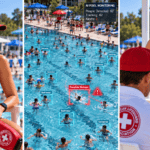
When families visit a public swimming pool, water park, hotel, resort, apartment complex, or community aquatic center, they assume trained lifeguards are watching the water and are prepared to respond immediately if an emergency occurs.
But an important question is often overlooked:
Are there enough lifeguards on duty to protect everyone in the water?
Proper lifeguard staffing is one of the most important components of operating a safe aquatic facility. While specific legal requirements vary depending on applicable federal, state, and local laws and regulations, as well as the type of aquatic facility, effective aquatic supervision depends on having enough lifeguards to maintain continuous patron surveillance, respond immediately to emergencies, and receive regular relief breaks throughout the operating day.
Aquatic facility operators should also ensure compliance with all applicable federal employment requirements administered by the U.S. Department of Labor and OSHA-enforced occupational safety requirements, where applicable.
Every Public Pool Should Begin With at Least Two Lifeguards
As a foundational aquatic safety best practice, every public or commercial swimming pool should begin with a minimum of two lifeguards whenever the pool is open and occupied.
Two lifeguards should be viewed as the operational starting point—not the final staffing level.
Additional lifeguards should then be assigned based on:
- The number of surveillance zones
- Patron attendance
- Pool size and configuration
- Facility design
- Water attractions
- Required relief rotations
- Programming and special events
- Applicable state and local regulations
Every aquatic facility presents unique challenges. Staffing should always reflect the actual risks associated with that facility rather than simply meeting the minimum number of personnel.
Why One Lifeguard Is Usually Not Enough
A single lifeguard should not be solely responsible for supervising an occupied swimming pool.
When a lifeguard enters the water to perform a rescue, provides first aid, begins CPR, operates an automated external defibrillator (AED), or responds to another emergency, that lifeguard can no longer maintain active surveillance of the remaining swimmers.
During those critical moments, another swimmer could become distressed without anyone immediately available to recognize and respond to the emergency.
Having at least two lifeguards allows one rescuer to provide emergency care while another continues actively scanning the water and protecting everyone else in the pool.
This continuous surveillance is one of the most important principles of effective drowning prevention.
Lifeguards Need Regular Relief Rotations
Lifeguarding demands constant concentration.
Maintaining active surveillance for extended periods can reduce alertness, scanning effectiveness, and response readiness.
Many aquatic facilities use rotation schedules such as:
- Approximately 40 minutes on surveillance followed by 20 minutes off, or
- Approximately one hour on surveillance followed by a brief recovery period.
The exact rotation schedule may vary depending on:
- Weather conditions
- Heat exposure
- Patron attendance
- Environmental conditions
- Facility operations
Regardless of the schedule used, no surveillance zone should ever be left unattended while a lifeguard is being relieved.
Regular relief periods also allow lifeguards to:
- Hydrate
- Recover from heat exposure
- Inspect equipment
- Complete required documentation
- Prepare mentally for their next surveillance assignment
Effective Emergency Response Requires Teamwork
Aquatic emergencies rarely involve only one responder.
During a serious emergency, one lifeguard may need to:
- Activate the facility’s Emergency Action Plan
- Enter the water
- Perform the rescue
- Remove the victim from danger
- Begin CPR
- Provide first aid
- Operate an AED
At the very same time, another lifeguard may need to:
- Continue supervising the remaining swimmers
- Clear the pool
- Contact Emergency Medical Services (EMS)
- Retrieve oxygen equipment, an AED, or first aid supplies
- Direct arriving emergency responders
- Control bystanders
- Assist with patient care
Having multiple trained responders allows emergency care to begin immediately while maintaining supervision of everyone else in the facility.
Victim Removal Often Requires More Than One Lifeguard
Removing an unconscious or seriously injured victim from the water frequently requires multiple rescuers.
One lifeguard may stabilize and support the victim while another assists with:
- Lifting
- Positioning
- Deck removal
- Patient transfer
Attempting these procedures alone may delay emergency care and increase the risk of injury to both the victim and the rescuer.
The need for multiple trained responders becomes even greater when the victim is:
- Unconscious
- Larger than the rescuer
- Seriously injured
- Located in deep water
Spinal Emergencies Require Coordinated Rescuers
Suspected spinal injuries present additional challenges.
Proper spinal injury management is intended to minimize unnecessary movement of the victim’s head, neck, and spine.
Typically:
- One lifeguard maintains continuous in-line stabilization.
- Another positions the backboard.
- Additional rescuers help secure the victim and safely remove the patient from the water.
These procedures require communication, teamwork, proper equipment, and regular practice.
Attempting spinal management with only one lifeguard is generally not practical and may compromise both patient care and rescuer safety.
Every Surveillance Zone Needs Its Own Lifeguard
Two lifeguards are only the starting point.
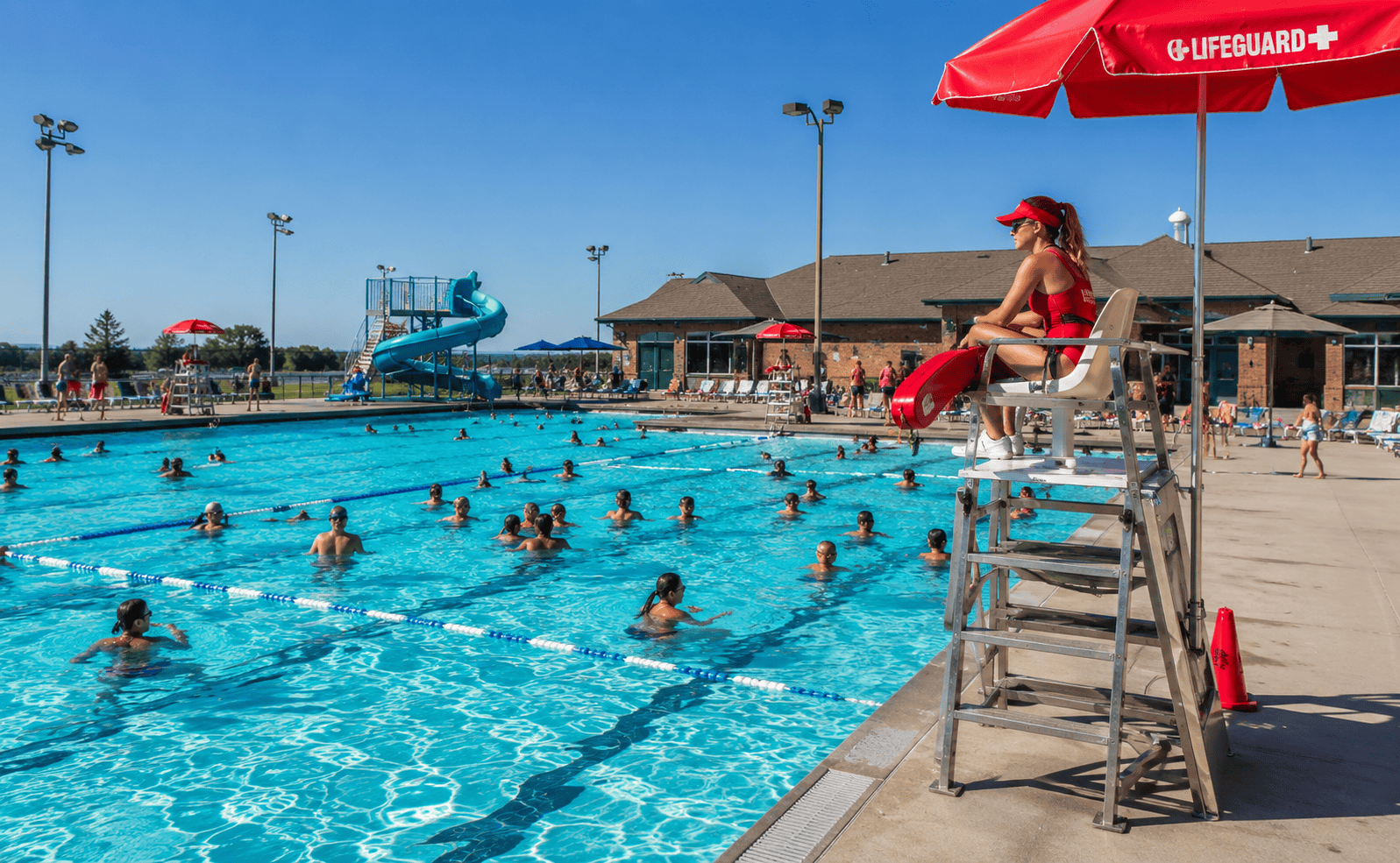
Every occupied lifeguard chair or designated surveillance zone should have one lifeguard assigned exclusively to that area.
Surveillance zones should be carefully designed so every assigned lifeguard has complete visibility and can rapidly recognize a swimmer in distress.
A lifeguard should never be expected to supervise multiple separate surveillance zones simultaneously.
Divided attention reduces scanning effectiveness and increases the likelihood that a struggling swimmer may go unnoticed.
Facility operators should also evaluate:
- Blind spots
- Sun glare
- Water features
- Structural obstructions
- Patron density
- Excessive noise
- Environmental conditions
All of these factors influence how many lifeguards are actually needed.
Relief Lifeguards Must Be Part of the Staffing Plan
Proper staffing does not end once every lifeguard chair is occupied.
Facilities also need additional lifeguards available to provide:
- Regular relief rotations
- Emergency backup
- Meal breaks
- Heat recovery
- Equipment inspections
- Administrative support
A facility that schedules only enough lifeguards to occupy each chair may still be understaffed if no one is available to provide relief or assist during emergencies.
Lifeguards should never abandon active surveillance to:
- Clean the facility
- Handle admissions
- Answer telephones
- Complete paperwork
- Perform maintenance duties
The staffing plan should always ensure every surveillance position remains continuously covered.
Staffing Must Match the Facility’s Risks
No single staffing number is appropriate for every swimming pool.
Facility managers should conduct site-specific evaluations that consider:
- Pool size
- Pool shape
- Water depth
- Visibility
- Blind spots
- Number of surveillance zones
- Patron attendance
- Patron age
- Swimming ability
- Diving boards
- Water slides
- Splash features
- Interactive attractions
- Lap swimming
- Swim lessons
- Camps
- Group events
- Weather conditions
- Emergency response access
- Any other site-specific hazards
Pools serving large numbers of children, inexperienced swimmers, camps, or school groups often require staffing levels substantially above the minimum.
Managers Should Not Automatically Count as Active Lifeguards
Managers and supervisors often perform duties that prevent them from maintaining uninterrupted surveillance.
They may need to:
- Coordinate staff
- Handle patron concerns
- Manage admissions
- Complete documentation
- Conduct inspections
- Communicate with emergency responders
Unless a manager is positioned and assigned exclusively to a clearly defined surveillance zone, that individual should not be counted as an active surveillance lifeguard.
Facilities should also ensure someone with appropriate authority is always available to activate the Emergency Action Plan, coordinate emergency operations, communicate with EMS, and document incidents.
A Practical Lifeguard Staffing Model
An effective aquatic staffing plan should:
- Begin with at least two lifeguards whenever the swimming pool is open and occupied.
- Assign one dedicated lifeguard to every active surveillance zone.
- Include additional lifeguards for regular rotations and relief.
- Ensure no surveillance zone is left unattended during rescues or medical emergencies.
- Increase staffing whenever attendance, attractions, programming, weather conditions, or other hazards increase the level of risk.
Is Your Pool Properly Staffed?
Every aquatic facility should be able to answer yes to these important questions:
- Are at least two lifeguards present whenever the pool is open and occupied?
- Is every surveillance zone continuously covered?
- Can one lifeguard perform a rescue while another continues surveillance?
- Are enough trained responders available to safely remove a victim from the water?
- Can a suspected spinal injury be managed appropriately?
- Are relief lifeguards scheduled throughout the day?
- Can lifeguards receive regular breaks without leaving surveillance positions unattended?
- Can the Emergency Action Plan be activated without interrupting patron surveillance?
- Has staffing increased to account for children, crowds, attractions, special events, and other elevated risks?
If the answer to any of these questions is no, the facility should reassess its staffing plan before continuing normal operations.
Lifeguard Staffing Is a Public Safety Responsibility
Proper lifeguard staffing is not simply a scheduling decision—it is a fundamental public safety responsibility.
Beginning with at least two lifeguards, assigning one lifeguard to every required surveillance zone, and providing additional personnel for relief rotations and emergency response helps protect swimmers, support lifeguards, strengthen emergency preparedness, and reduce the likelihood that a preventable incident becomes a tragedy.
Every swimmer deserves vigilant supervision, and every lifeguard deserves the support necessary to perform their job safely and effectively.
Investing in proper lifeguard staffing is one of the smartest—and most important—investments any aquatic facility can make.
About the American Lifeguard Association
The American Lifeguard Association (ALA) has been a national leader in lifeguard training, water safety education, CPR, First Aid, and emergency preparedness for more than 30 years. The organization works with aquatic facilities, employers, government agencies, and educational institutions to promote best practices that help reduce drowning and improve public safety.