Every summer, millions of Americans head to swimming pools, lakes, rivers, beaches, and water parks to cool off and spend time with family and friends. Unfortunately, summer also marks the peak season for drowning incidents. While water activities create lifelong memories, they also require constant attention and preparation to ensure everyone returns home safely.
The American Lifeguard Association (ALA) is encouraging families across the United States to review essential water safety practices before entering the water. Through active supervision, proper swimming instruction, trained lifeguards, and informed decision-making, most drowning incidents can be prevented.
These recommendations were recently highlighted in a nationally published Everyday Health article, “11 Swimming Safety Tips to Follow This Summer,” which features extensive guidance from Bernard J. Fisher II, Director of Health and Safety for the American Lifeguard Association.
Read the full Everyday Health article here: https://www.everydayhealth.com/healthy-living/swimming-safety-tips-to-follow-this-summer/
For decades, the American Lifeguard Association has worked to reduce preventable drownings through professional lifeguard certification, water safety education, swimming instruction, public awareness campaigns, and community outreach. The organization believes that every family plays an important role in creating safer aquatic environments.
Drowning Remains a Serious Public Health Concern
Approximately 4,000 people lose their lives to drowning each year in the United States, while thousands more receive emergency medical treatment for nonfatal drowning injuries. Young children remain among those at greatest risk, but drowning affects individuals of every age.
One of the most dangerous misconceptions is that drowning looks dramatic.
In reality, drowning is often silent. Victims rarely wave their arms or call for help. Many simply slip beneath the surface within seconds without attracting attention.
Because drowning can happen quickly and quietly, the American Lifeguard Association emphasizes that prevention—not rescue—must always be the primary goal.
“Drownings are preventable, and active supervision is one of the most important rules of water safety,” said Bernard J. Fisher II. “Parents and caregivers must remain attentive whenever children are in or near the water.”
Active Supervision Saves Lives
No piece of safety equipment is more effective than an attentive adult.
Parents should never assume someone else is watching their child. Supervision means keeping children within sight and, for younger children and weak swimmers, remaining within arm’s reach whenever they are in or around the water.
Watching from a lounge chair, talking with friends, scrolling through a phone, or supervising from inside the house is not active supervision.
Even brief distractions can have tragic consequences.
A Lifeguard Is Not a Babysitter
One of the American Lifeguard Association’s most important messages is simple:
A lifeguard is not a babysitter.
Many parents mistakenly believe that once a lifeguard is present, they can relax their supervision. Nothing could be further from the truth.
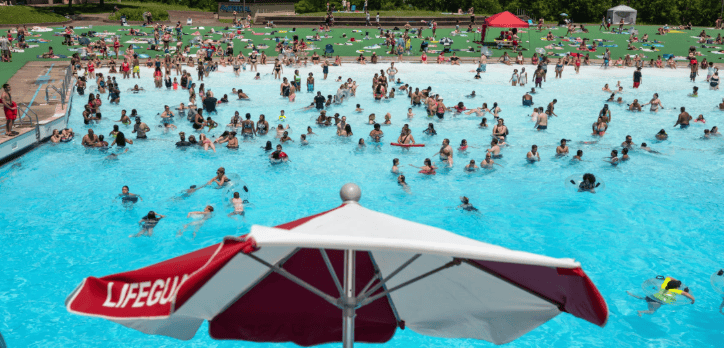
Professional lifeguards monitor hundreds of swimmers simultaneously while enforcing rules, identifying hazards, preventing accidents, and remaining prepared to respond instantly to emergencies.
“Lifeguards are responsible for protecting an entire aquatic area,” Fisher explained. “Parents and caregivers remain responsible for closely supervising their own children at all times.”
Lifeguards provide an essential layer of protection—but they cannot replace responsible parenting.
Choose Swimming Areas Protected by Lifeguards
Whenever possible, families should choose swimming locations where professionally trained lifeguards are on duty.
Before entering the water:
- Verify that lifeguards are present.
- Read all warning signs.
- Observe weather conditions.
- Check water quality advisories.
- Follow posted swimming restrictions.
“Choosing a guarded swimming location is one of the simplest and most effective ways to reduce risk,” Fisher said.
Designate a Water Watcher
The American Lifeguard Association strongly recommends assigning one responsible adult as the Water Watcher whenever children are swimming.
The Water Watcher’s responsibilities include:
- Watching swimmers continuously
- Staying free from distractions
- Avoiding alcohol
- Avoiding cell phones
- Remaining within arm’s reach of young children
- Officially transferring responsibility before taking a break
“A Water Watcher has one job: watch the swimmers,” Fisher said. “That means no phone, no alcohol, no side conversations, and no distractions until another responsible adult officially takes over.”
Learn to Swim
Swimming lessons save lives.
Learning basic swimming skills significantly reduces drowning risk while increasing confidence around water.
Children should begin age-appropriate swimming lessons when developmentally ready, while adults who never learned to swim should also consider professional instruction.
Swimming ability, however, should never replace supervision.
Even experienced swimmers encounter:
- fatigue
- cold water
- medical emergencies
- rip currents
- unexpected hazards
Never Swim Alone
Regardless of age or swimming ability, swimming alone is never recommended.
A swimming companion can:
- call for help
- assist during emergencies
- recognize distress early
- activate emergency response
The buddy system remains one of the oldest—and most effective—water safety practices.
Wear Properly Fitted Life Jackets
Life jackets save lives.
Whenever boating or participating in water recreation, children and inexperienced swimmers should wear a properly fitted U.S. Coast Guard-approved life jacket.
The American Lifeguard Association reminds families that recreational flotation products—including water wings, inflatable rings, and pool noodles—are not safety devices.
These products may:
- puncture
- drift away
- slip off
- create false confidence
Only approved life jackets provide reliable flotation during emergencies.
Understand Rip Currents
Rip currents are among the most dangerous hazards at ocean beaches.
Contrary to popular belief, they do not pull swimmers underwater.
Instead, they carry swimmers away from shore.
If caught in a rip current:
- Stay calm.
- Signal for help.
- Conserve energy.
- Swim parallel to the shoreline until free.
- Return to shore at an angle.
“Rip currents do not pull swimmers underwater—they pull them away from shore,” Fisher explained.
Pool Safety Starts Before Anyone Swims
Home swimming pools deserve the same attention as public aquatic facilities.
Families should:
- Install four-sided fencing
- Use self-closing, self-latching gates
- Secure pool covers
- Remove toys after swimming
- Keep rescue equipment nearby
- Maintain proper water clarity
- Learn CPR
Children should never be left unattended near pools—even if they know how to swim.
Lakes and Rivers Present Different Risks
Natural bodies of water contain hazards not found in swimming pools.
These include:
- changing currents
- submerged rocks
- underwater vegetation
- sudden drop-offs
- cold-water shock
- reduced visibility
Swimmers should always exercise additional caution when entering unfamiliar water.
Boating Safety Matters
Whether kayaking, paddleboarding, fishing, or operating a motorboat, every passenger should wear an approved life jacket.
Boat operators should:
- avoid alcohol
- monitor weather
- carry emergency equipment
- file a float plan
- understand local navigation rules
Learn CPR
Every parent, coach, teacher, camp counselor, and boat owner should consider becoming CPR certified.
Immediate bystander CPR can significantly improve survival following a drowning emergency while emergency medical services are responding.
Learning CPR may one day save the life of someone you love.
Common Water Safety Myths
Myth: Lifeguards watch my child.
False.
Parents remain responsible for supervision.
Myth: Water wings prevent drowning.
False.
They are toys—not lifesaving devices.
Myth: Good swimmers cannot drown.
False.
Fatigue, injury, medical emergencies, and dangerous water conditions affect everyone.
Myth: Drowning is loud.
False.
Most drowning incidents are silent.
Frequently Asked Questions
What is the number one rule of water safety?
Active adult supervision remains the single most effective way to prevent drowning.
Should children always wear life jackets?
Whenever boating or swimming in open water, properly fitted U.S. Coast Guard-approved life jackets are strongly recommended.
At what age should children learn to swim?
Children should begin age-appropriate swimming lessons when developmentally ready. Parents should consult qualified instructors regarding readiness.
What should I do if someone is drowning?
Call 911 immediately, alert the lifeguard if one is present, use reaching or throwing assists whenever possible, and begin CPR if trained once the individual is removed from the water.
Water Safety Is Everyone’s Responsibility
Preventing drowning requires multiple layers of protection working together:
- Active adult supervision
- Water Watchers
- Swimming lessons
- Professionally trained lifeguards
- Proper life jackets
- CPR training
- Understanding local water hazards
- Following posted warnings
No single strategy is enough by itself. Together, these proven safety measures dramatically reduce the risk of drowning and help ensure that every family enjoys a safe summer around the water.
The recent Everyday Health feature serves as another reminder that the fundamentals of water safety remain just as important today as they have always been.
“Lifeguards provide an essential layer of protection, but water safety is a shared responsibility,” Fisher concluded. “Proper supervision, swimming ability, trained lifeguards, and informed decision-making save lives.”
Whether you’re visiting a neighborhood pool, relaxing at the beach, spending the weekend at the lake, or enjoying a family boating trip, take a few moments to review these lifesaving principles before entering the water.
Every drowning prevented represents a life saved, a family protected, and a tragedy avoided.
To learn more about water safety, professional lifeguard certification, swimming education, and drowning prevention, visit www.americanlifeguard.com.