The American Lifeguard Association believes that every child should have the opportunity to learn basic swimming and water safety skills, regardless of family income, location, or access to private lessons. That is why the recent proposal in Surrey, British Columbia, to launch free introductory swim lessons for children is an idea that should be seriously considered by major cities across the United States.
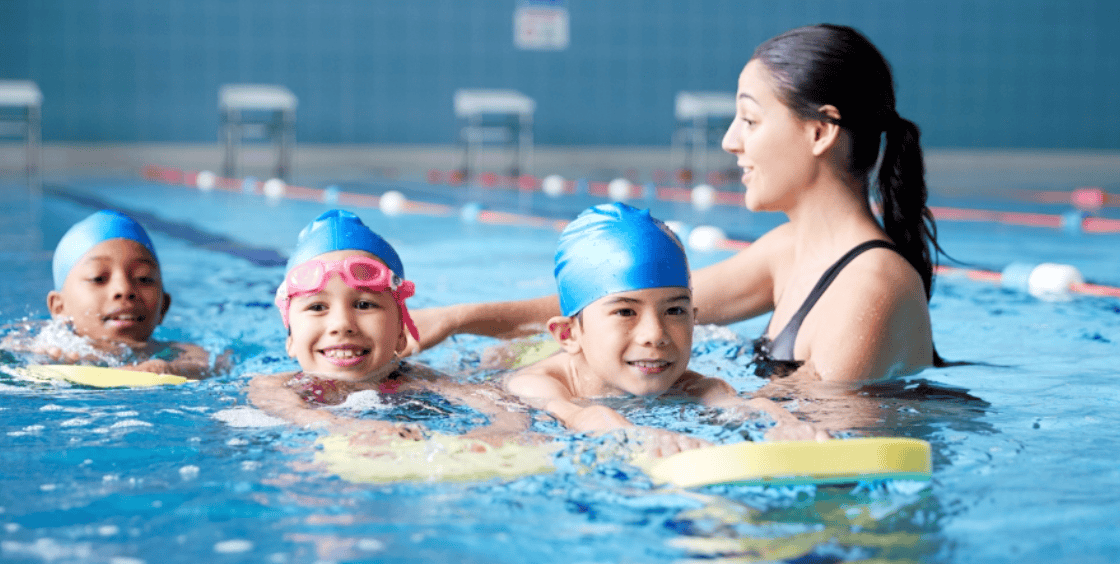
According to CBC News, the City of Surrey is working toward offering free beginner swim lessons for children ages three to twelve. The proposal, supported by Surrey Mayor Brenda Locke, is based on a simple but powerful belief: money should not be a barrier to learning how to swim.
The American Lifeguard Association strongly agrees with this approach. Learning to swim is not just a recreational activity. It is a life-saving skill.
Swimming Lessons Are a Public Safety Issue
Across the United States, too many children grow up without access to basic swim lessons. Some families cannot afford private instruction. Others face long waitlists, limited pool availability, transportation issues, or difficulty registering for city-run programs.
The result is that many children enter summer without the basic skills needed to be safer around pools, lakes, rivers, beaches, and waterparks.
This is why the American Lifeguard Association supports LearnToSwimAmerica.org. The initiative promotes the importance of swim education, water safety awareness, and broader access to beginner swimming lessons for children and families throughout the United States.
Free or expanded beginner swim lessons should not be viewed as an extra benefit. They should be seen as a public safety investment.
Major U.S. Cities Should Follow This Example
Cities such as New York, Los Angeles, Chicago, Houston, Miami, Dallas, Atlanta, Phoenix, Philadelphia, and Washington, D.C., all have large populations and diverse communities where children would benefit from greater access to swimming instruction.
Many of these cities already operate public pools, recreation centers, school programs, and community aquatic facilities. By expanding access to free or low-cost introductory swim lessons, city leaders can help reduce drowning risks and give children an essential life skill.
Surrey’s proposal is important because it shows that local governments can take direct action. Instead of only responding after drowning tragedies occur, cities can invest in prevention.
Free Swim Lessons Must Be Matched With Instructor Capacity
One important lesson from Surrey’s discussion is that free swim lessons must be supported by adequate staffing. If a city offers free lessons but does not have enough lifeguards, swim instructors, pool space, or class availability, families may still struggle to participate.
That is why any successful learn-to-swim program must include:
trained swim instructors, certified lifeguards, available pool space, partnerships with schools, community outreach, and support from local government.
The American Lifeguard Association believes cities should work with school districts, aquatic facilities, nonprofit organizations, and local employers to expand both swim lesson access and lifeguard training opportunities.
This kind of partnership can help communities build a stronger water safety network while also supporting future lifeguard recruitment.
Why ALA Supports Learn To Swim America
The American Lifeguard Association supports LearnToSwimAmerica.org because drowning prevention begins before a child ever becomes a strong swimmer. It begins with access. It begins with education. It begins with giving families the opportunity to place their children in beginner swim lessons without unnecessary financial or logistical barriers.
A national movement for free or expanded beginner swim lessons would benefit children, families, schools, aquatic facilities, and entire communities.
Swimming lessons help children gain confidence. They help parents feel more secure. They help communities reduce risk. Most importantly, they can save lives.
A Call to Action for U.S. Cities
The City of Surrey’s proposal should be applauded. It is a practical, family-centered, and safety-focused approach that major American cities should consider adopting.
The American Lifeguard Association encourages city leaders, school districts, recreation departments, aquatic professionals, and community organizations to support programs that make beginner swim lessons more accessible.
Every child deserves the opportunity to learn how to be safer in and around the water.
That is why the American Lifeguard Association supports LearnToSwimAmerica.org and believes that free or expanded swim lessons for children should become a priority in major cities across the United States.