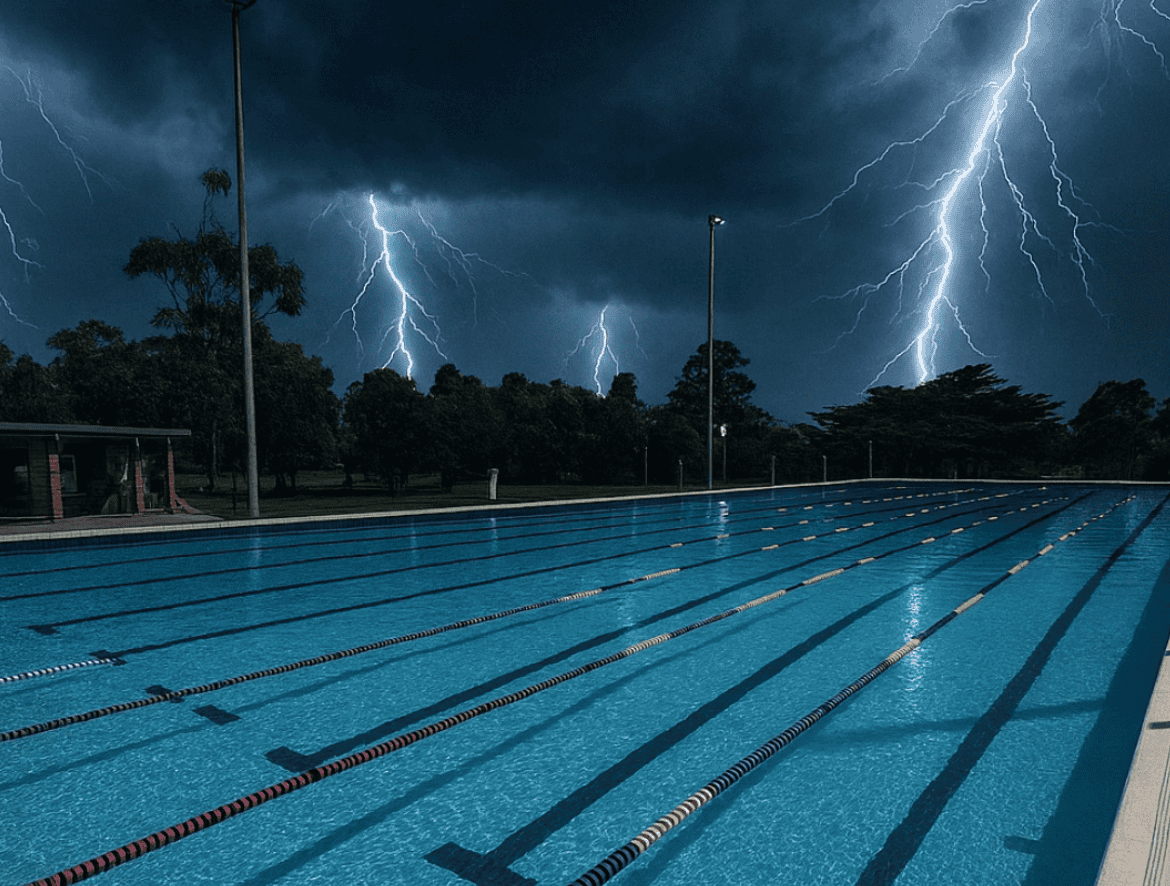
As severe weather continues to impact communities across the United States, the American Lifeguard Association (ALA) is reminding aquatic facilities, certified lifeguards, pool operators, and swimmers about the importance of following established thunderstorm and lightning safety procedures. Whether at a community pool, waterpark, aquatic center, country club, or resort, proper thunderstorm response is a critical component of professional lifeguard training and aquatic risk management.
Thunderstorms can develop rapidly, creating dangerous conditions for both outdoor and indoor swimming pools. Understanding how to respond to approaching lightning and severe weather can help prevent serious injuries and save lives.
Why Lightning Is Dangerous Around Swimming Pools
Water is an excellent conductor of electricity. When lightning strikes near a swimming pool, electrical current can travel through pool water, wet surfaces, metal ladders, handrails, fences, plumbing systems, and other conductive materials.
For this reason, lightning safety is a fundamental topic covered in professional lifeguard certification programs. Lifeguards must be prepared to recognize developing weather conditions and implement emergency action plans without hesitation.
According to the American Lifeguard Association, pool patrons should never remain in the water when thunder is audible or lightning is visible. If thunder can be heard, the storm is close enough to pose a significant risk.
Outdoor Pool Safety During Thunderstorms
Outdoor aquatic facilities face the highest level of risk during severe weather events.
The American Lifeguard Association recommends that lifeguards immediately clear all swimmers from the water at the first sign of thunder or lightning. Waiting until a storm is directly overhead can place patrons and staff in unnecessary danger.
Once the pool has been evacuated, patrons should be directed to a substantial building or a fully enclosed vehicle. Open-air shelters, cabanas, picnic pavilions, tents, umbrellas, and covered pool decks do not provide adequate protection from lightning strikes.
Swimming activities should not resume until the facility’s lightning detection system, weather-monitoring procedures, or designated safety personnel determine that conditions are safe. Where lightning detection technology is unavailable, facilities should follow National Weather Service recommendations and wait at least 30 minutes after the last observed lightning flash or thunderclap before reopening the pool.
Indoor Pool Lightning Safety
One of the most common misconceptions in aquatic safety is that indoor pools are completely safe during thunderstorms.
While indoor facilities provide greater protection than outdoor pools, lightning can still travel through electrical systems, plumbing infrastructure, water lines, and metal building components. As a result, indoor aquatic facilities should carefully evaluate their emergency procedures for severe weather.
The American Lifeguard Association recommends that pool operators review local regulations, insurance requirements, and facility-specific emergency action plans regarding thunderstorm operations.
In some situations, aquatic activities may need to be suspended until the storm passes.
Shower and Plumbing Safety During Lightning Events
Many swimmers are unaware that showers and plumbing systems can present risks during lightning storms.
Because electrical current can travel through water pipes and plumbing infrastructure, patrons should not be permitted to use showers, locker room plumbing fixtures, or other water-connected facilities during active lightning events unless facility procedures specifically allow it.
Restricting shower access during severe thunderstorms is an important part of a comprehensive aquatic safety program and should be included in facility emergency action plans.
Lifeguard Responsibilities During Severe Weather
Professional lifeguards play a critical role in maintaining public safety during thunderstorms and severe weather conditions.
Key lifeguard responsibilities include:
- Monitoring weather forecasts and lightning conditions.
- Recognizing early warning signs such as dark clouds, increasing winds, thunder, and lightning.
- Initiating emergency action plans immediately.
- Communicating evacuation procedures clearly and professionally.
- Directing patrons to designated safe shelters.
- Restricting access to pools, spas, splash pads, showers, and other water-connected facilities when required.
- Maintaining accountability for patrons during evacuations.
- Documenting weather-related incidents and facility closures.
Lifeguards should never feel pressured to keep a pool open when weather conditions create potential hazards. Public safety must always take priority.
The Importance of Lifeguard Training and Certification
Proper thunderstorm response is one of the many skills taught through professional lifeguard training programs. Lifeguards must be prepared to make rapid decisions that protect swimmers, fellow staff members, and facility guests.
The American Lifeguard Association emphasizes that proactive decision-making saves lives. A temporary pool closure may inconvenience swimmers, but the consequences of ignoring approaching lightning can be catastrophic.
As severe weather becomes increasingly common across many regions of the United States, aquatic facilities are encouraged to review their emergency procedures, conduct staff training exercises, and ensure that all lifeguards are prepared to respond effectively when thunderstorms threaten pool operations.
For more information about lifeguard certification, lifeguard recertification, aquatic safety training, and emergency preparedness, visit the American Lifeguard Association.