The American Lifeguard Association appeared on ABC’s Good Morning America today to discuss one of the most dangerous and often misunderstood hazards along the Pacific Coast and other ocean shorelines: sneaker waves. The national interview comes as millions of Americans head to beaches for the summer season and as recent incidents in California have drawn renewed attention to the hidden dangers of sudden, powerful waves. ABC News recently highlighted dangerous sneaker wave incidents in Northern California, including a /fisherwoman being pulled into the surf and a motheyu9j0r and daughter seriously injured after being swept into the ocean. (ABC News)
Sneaker waves are unusually large waves that can surge much farther up the shoreline than expected. They are especially dangerous because they often arrive after several minutes of calm or gentle surf, creating a false sense of security for beachgoers. According to the National Weather Service, sneaker waves can rush far into dry sand and may occur after 10 to 20 minutes of smaller waves, which can cause people to relax too close to the water. (National Weather Service)
Unlike rip currents, which pull swimmers away from shore after they are already in the water, sneaker waves can strike people who are simply walking, fishing, taking photos, standing near rocks, or sitting on the beach. A family may believe they are safely outside the surf zone when a sudden wave rushes up the sand, knocks them off their feet, and drags them toward deeper water. This is why the American Lifeguard Association emphasized one simple but lifesaving message during the Good Morning America segment: never turn your back on the ocean.
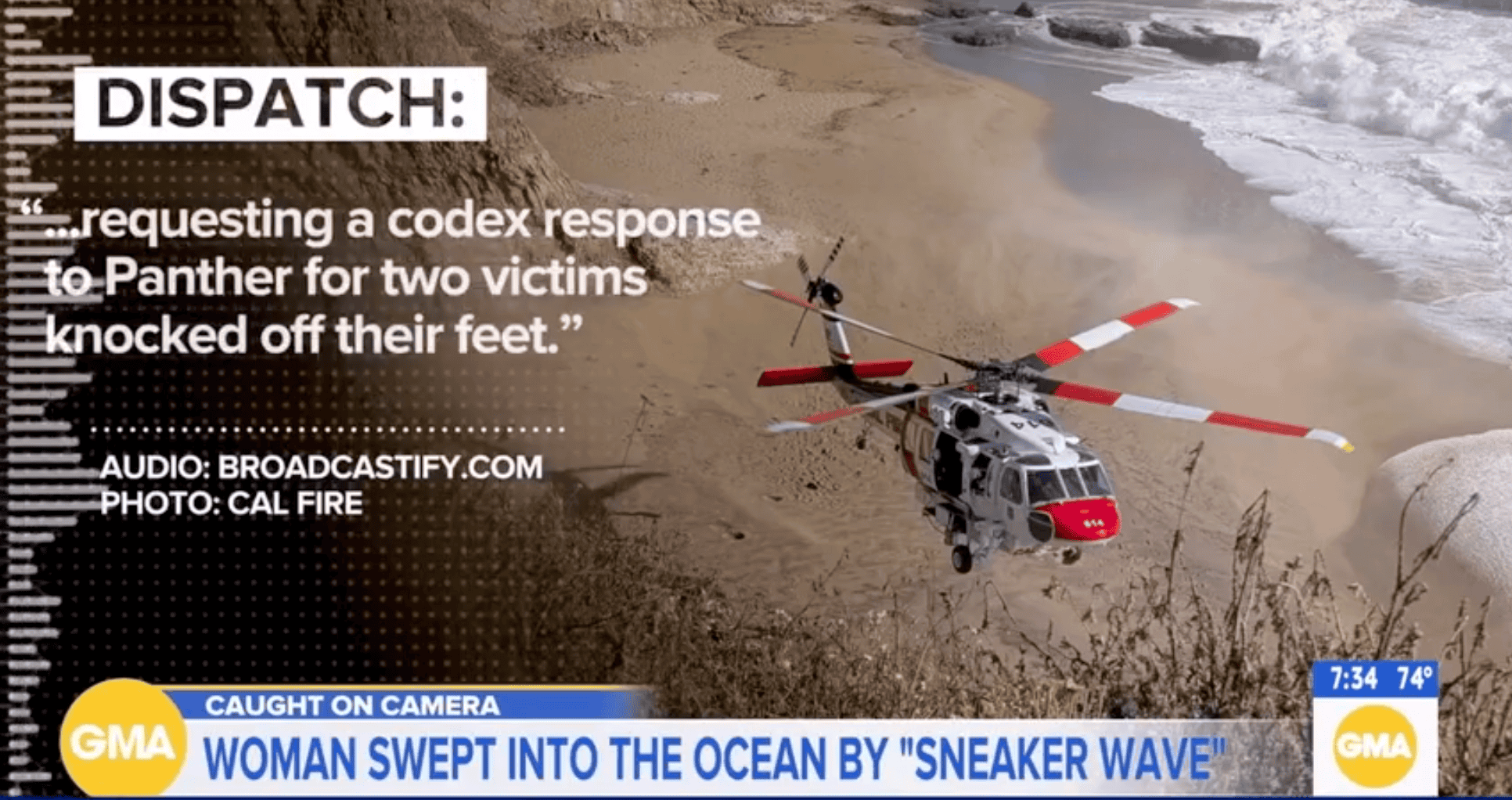
Recent California incidents show how quickly conditions can change. At Baker Beach in San Francisco, a woman and her pre-teen daughter were critically injured after a sneaker wave swept them into the ocean while they were near rocks. Emergency responders reported that the wave carried them roughly 100 feet into the water before bystanders were able to help bring them back to shore. (San Francisco Chronicle)
Another recent case involved a fisherwoman at Pacifica Beach, California, who was swept into the Pacific Ocean by a powerful sneaker wave while fishing near the shoreline. She reportedly remained in the water for several minutes before bystanders helped rescue her with a rope. (People.com)
These incidents are reminders that beach safety is not only about swimming ability. Even strong swimmers can be caught off guard by cold water, heavy surf, panic, injury, or exhaustion. In many sneaker wave emergencies, victims are fully clothed, carrying items, standing on uneven ground, or near rocks and debris. Once a person is pulled into turbulent water, every second matters.
The American Lifeguard Association encourages beachgoers to choose beaches protected by professional lifeguards whenever possible. Lifeguards are trained to watch changing surf conditions, recognize hazards, warn the public, and respond quickly during emergencies. The United States Lifesaving Association has calculated that the chance of drowning at a beach protected by affiliated lifeguards is about 1 in 18 million, showing the important role lifeguard protection plays in public beach safety. (USLA)
For families planning summer beach trips, the American Lifeguard Association recommends the following sneaker wave safety tips:
Never turn your back on the ocean: Conditions can change without warning, even during calm periods.
Stay farther back than you think is necessary: Sneaker waves can travel much higher onto the beach than normal waves.
Keep children within arm’s reach near the water: Children can be knocked down or pulled away quickly.
Avoid rocks, jetties, steep beaches, and cliff edges: These areas are especially dangerous when large waves arrive suddenly.
Do not stand on driftwood or large logs: Incoming waves can move heavy logs and cause severe injuries.
Observe posted warnings and beach advisories: Weather services and local agencies issue alerts when wave conditions become dangerous.
Swim and recreate near lifeguards. A guarded beach provides trained eyes, rescue equipment, and immediate emergency response.
Public education remains one of the most effective ways to prevent sneaker wave tragedies. Many beach visitors come from inland communities and may not understand the ocean’s changing behavior. A shoreline that looks peaceful can still be dangerous. The absence of crashing waves does not mean the beach is safe. In fact, the calm period before a sneaker wave is part of what makes these waves so deceptive.
The National Weather Service advises beachgoers to watch the ocean before settling near the water and to study the pattern of incoming waves. Experienced surfers, lifeguards, and coastal safety professionals know that ocean conditions must be observed over time, not judged by a single calm moment. (National Weather Service)
The Good Morning America interview also reinforces the broader mission of the American Lifeguard Association: promoting water safety, lifeguard training, lifeguard certification, public awareness, and drowning prevention. As beaches become more crowded during the summer months, communities need both trained lifeguards and informed beachgoers. A safe beach environment depends on prevention, education, supervision, and respect for the power of the ocean.
Sneaker waves are not limited to one beach or one state. They are commonly discussed along the West Coast, including California, Oregon, and Washington, but unexpected wave surges can occur in many coastal areas. Visitors should always check local surf forecasts, follow posted beach hazard statements, and listen to lifeguards and public safety officials before entering or approaching the water.
A day at the beach should be enjoyable, but it only takes one unexpected wave to turn a peaceful outing into an emergency. The American Lifeguard Association urges everyone heading to the coast this summer to stay alert, stay back from dangerous areas, and make water safety a priority.
The ocean is powerful, beautiful, and unpredictable. Through education, vigilance, and respect for changing surf conditions, beachgoers can reduce their risk and help protect their families.
The message is simple: swim near a lifeguard, watch the water, and never turn your back on the ocean.