
If you visit beaches or swimming pools in Malta, you’ll notice lifeguards stationed along the shore or poolside, ensuring everyone’s safety. A lifeguard’s essential duty is to prevent accidents and respond effectively in emergencies, and that requires professional training. Lifeguard training in Malta equips participants with the knowledge and skills needed to protect swimmers at beaches, resorts, water parks, and pools.
Malta is surrounded by the Mediterranean Sea and offers some of Europe’s clearest waters, sandy coves, and blue lagoons. Its popularity with divers, swimmers, and tourists means trained lifeguards are vital to ensuring year-round water safety.
Lifeguards in Malta serve at beaches, waterparks, hotels, and swimming complexes across the islands of Malta, Gozo, and Comino. With so many aquatic facilities and tourist attractions, there are numerous opportunities for certified lifeguards.
Lifeguard training in Malta is the first step toward a fulfilling career in aquatics. Once certified by a respected organization like the American Lifeguard Association (ALA), candidates become well-qualified for employment at beaches, resorts, pools, and marinas.
ALA training centers in Malta offer several lifeguard training courses and certifications. While training demand peaks during the summer months, Malta’s mild climate and resort industry create opportunities for lifeguards year-round.
With more than 30 years of global experience, ALA has trained thousands of professionals who now serve in communities worldwide. ALA certification is recognized internationally and demonstrates excellence and professionalism in aquatic safety.
The American Lifeguard Association (ALA) is supported by Global Lifeguards and the Swimming Pool and Spa Foundation, both nonprofit organizations committed to reducing drownings and improving aquatic safety.
ALA works directly with aquatic facilities and employers worldwide to provide standardized, high-quality lifeguard training. Its programs are recognized by:
Courses incorporate the latest ECC science and follow the Model Aquatic Health Code (MAHC) guidelines for in-service and pre-service training.
To enroll in ALA’s lifeguard training course in Malta, participants must meet the following standards:
15 years or older to work at a swimming pool, waterpark, or lake
16 years or older to work at beaches or open-water facilities
Swim 300 yards continuously, using:
100 yards of front crawl with rhythmic breathing and propellant kick
100 yards of breaststroke (pull, breath, kick, glide sequence)
100 yards of front crawl or breaststroke, or a mix of both
Timed event (1 minute, 40 seconds maximum):
Start in the water and swim 20 yards
Surface-dive 7–10 feet to retrieve a 10-lb object
Swim back 20 yards, holding the object
Exit without using steps or a ladder
Upon completion, participants receive an American Lifeguard Certificate in Lifeguarding, CPR/AED for the Professional Rescuer, and First Aid, valid for two years.
Many lifeguards begin their careers seasonally, but lifeguarding in Malta can grow into a full-time profession. Opportunities exist year-round at resort pools, hotels, marinas, and aquatic centers.
With additional training, lifeguards can advance to higher-paying and leadership positions such as:
Water Safety Instructor
Swim Coach
Aquatic Facility Manager or Supervisor
These roles provide professional growth and contribute to Malta’s growing emphasis on tourism safety and water-sports management.
During the ALA lifeguard training program, participants learn essential rescue, resuscitation, and first-aid techniques.
Slide-In Entry; Stride and Compact Jumps
Rescue Approach (front crawl or breaststroke)
Simple, Extension, and Throwing Assists
Active and Passive Drowning Victim Rescues
Two-Person Removal with Backboard
Submerged Victim Recovery (shallow & deep water)
Multiple-Victim Rescue and Head-Hold Escapes
Initial Assessment and Protective Equipment
Rescue Breathing (Adult, Child, Infant)
Bag-Valve-Mask Use (two rescuers)
Choking Response (Conscious and Unconscious)
One- and Two-Rescuer CPR (Adult, Child, Infant)
AED Use for Adults and Children
Secondary Assessment
Bleeding Control and Wound Management
Sling, Binder, and Splint Applications
Active Drowning Victim
Submerged Passive Drowning Victim
Suspected Head, Neck, or Back Injury
Golden Bay (Mellieħa): One of Malta’s most famous sandy beaches. Lifeguards are stationed daily during the summer to supervise large crowds and swimmers.
Għajn Tuffieħa Bay: A scenic, quieter beach next to Golden Bay, patrolled by lifeguards in high season. Known for strong currents — safety flags are posted.
Mellieħa Bay (Ghadira): Malta’s largest sandy beach with calm waters, ideal for families. Fully staffed with lifeguards throughout the summer months.
Paradise Bay: Located near Cirkewwa, this small, picturesque beach has seasonal lifeguards and is popular for snorkeling.
St. George’s Bay (St. Julian’s): Urban beach near the entertainment district, with full lifeguard coverage during peak hours.
Balluta Bay: Compact sandy bay frequented by locals; lifeguard supervision during weekends and public holidays.
Tigné Point (Sliema): Rocky beach area with designated swimming zones and seasonal lifeguard presence.
Pretty Bay (Birżebbuġa): A family-friendly beach with shallow water. Lifeguards operate under the Malta Red Cross and Civil Protection Department.
St. Peter’s Pool (Delimara): A natural swimming cove famous for cliff diving; lifeguard patrols increase during tourist season.
Ramla Bay: Gozo’s most popular red-sand beach with professional lifeguards on duty daily in summer.
Marsalforn Bay: Popular for swimming and snorkeling. Seasonal lifeguards and clearly marked safe zones.
Xlendi Bay: Beautiful bay surrounded by cliffs; seasonal lifeguards and safe swimming areas near hotels and cafes.
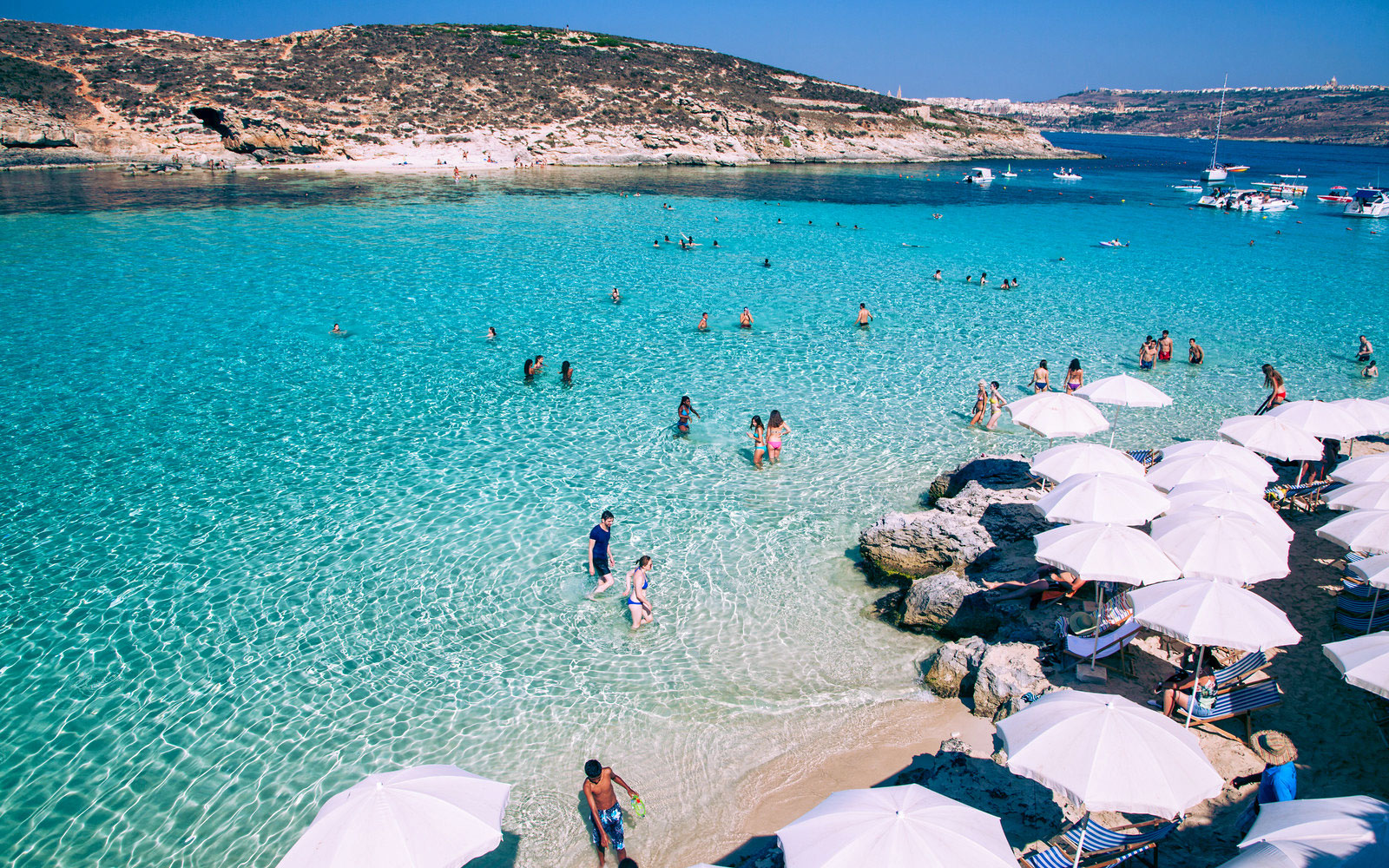
Blue Lagoon: One of Malta’s top tourist attractions, famous for its turquoise water. Lifeguards are stationed by the Civil Protection Department and resort staff during peak season.
The purpose of lifeguard training in Malta is to prepare professionals to keep swimmers safe and to promote a water-safety culture across the islands. Lifeguards often monitor their zones from high chairs or patrol open-water areas equipped with binoculars, rescue boards, and first-aid tools.
The American Lifeguard Association (ALA) is recognized globally as a leading provider of aquatic safety and health training. With over 30 years of expertise, ALA’s programs meet international safety standards and maintain a strong commitment to excellence.
If you’re searching for “lifeguard training near me” in Malta, the American Lifeguard Association is your best choice. Visit the official ALA website or contact a local training center in Malta for course details and enrollment.