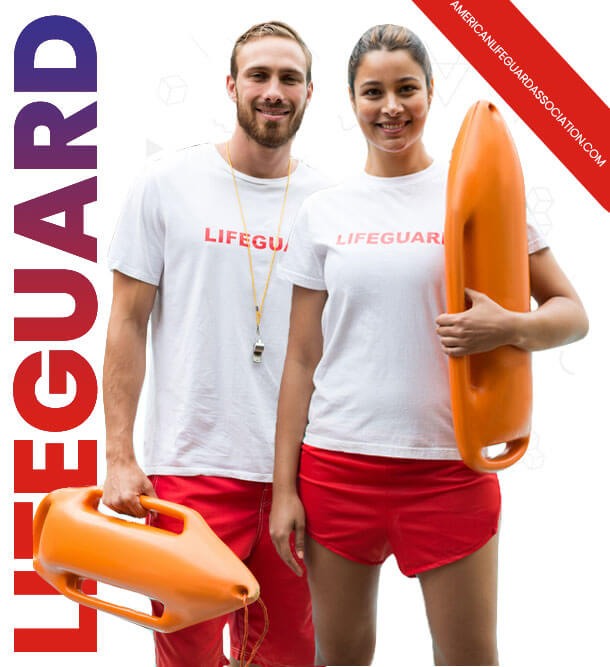
The American Lifeguard Association® Shallow Water Lifeguard Training and Certification Program is designed for individuals who want to work at swimming pools, waterparks, aquatic attractions, hotels, resorts, schools, camps, fitness centers, and other facilities where lifeguards are assigned to shallow-water environments.
This program provides professional instruction in patron surveillance, drowning prevention, shallow-water rescue skills, victim recognition, CPR/AED for the Professional Rescuer, First Aid, spinal-injury management, Emergency Action Plans, and lifeguard teamwork.
The shallow-water program is an appropriate option for candidates who are comfortable in the water but are not yet prepared to complete the more demanding swimming and object-retrieval requirements associated with deep-water lifeguard certification.
Participants who successfully complete the program receive two-year certifications in:
ALA currently lists shallow-water lifeguard training at $285 for first-time participants and $185 for recertification, including CPR/AED and First Aid.
A shallow water lifeguard is trained to supervise and respond to emergencies in designated aquatic environments where the water depth falls within the limits of the certification and the facility’s operating requirements.
Shallow-water lifeguards may work at locations such as:
Shallow-water certification does not automatically qualify a lifeguard to supervise deep swimming pools, diving wells, waterfronts, lakes, beaches, surf environments, or other locations that require advanced swimming and rescue capabilities.
This course may be appropriate for you when:
The American Lifeguard Association currently offers separate certification pathways for shallow-water-only lifeguards and lifeguards who qualify for both shallow- and deep-water assignments.
Candidates must successfully complete two swimming-skills evaluations.
These requirements match the current American Red Cross Shallow Water Lifeguarding swimming prerequisites.
Complete the following sequence without stopping to rest:
Step 1: Enter and Swim 50 Yards
Swimming on the back or side is not permitted during this portion of the evaluation.
Swimming goggles may be worn.
Step 2: Maintain Position for Two Minutes
Remain at the surface for two minutes by using:
Unlike the deep-water prerequisite, shallow-water candidates may use floating as part of this two-minute portion.
Step 3: Swim Another 50 Yards
Immediately swim an additional 50 yards using:
The entire sequence must be completed without stopping to rest.
Total Swimming Distance
The total swimming distance is:
100 yards
This consists of 50 yards before the two-minute tread or float and 50 yards afterward.
Prerequisite 2: Timed Shallow-Water Object Retrieval
Complete the following event within:
50 seconds
Required Sequence
Swimming goggles are not permitted during the timed event.
| Skill | Requirement |
| Initial swim | 50 yards |
| Permitted strokes | Front crawl, breaststroke, or both |
| Surface-position skill | 2 minutes |
| Permitted technique | Leg-only tread, floating, or both |
| Final swim | 50 yards |
| Total distance | 100 yards |
| Timed event | 50 seconds |
| Approach distance | 20 yards |
| Object | 10 pounds |
| Retrieval depth | 4–7 feet |
| Return | Walk or swim 20 yards on the back |
| Exit | Without steps or a ladder |
| Goggles | Permitted for swimming sequence; not permitted for timed event |
Successfully completing the swimming prerequisites demonstrates eligibility to proceed with shallow-water lifeguard training. It does not by itself earn certification.
Candidates must also:
Shallow-water and deep-water lifeguards share many of the same professional responsibilities, including patron surveillance, rule enforcement, emergency recognition, CPR/AED, First Aid, rescue-equipment use, and Emergency Action Plan participation.
The primary difference is the aquatic environment in which the lifeguard is trained and authorized to work.
| Shallow Water Certification | Deep Water Certification |
| Designed for designated shallow-water environments | Designed for shallow- and deep-water environments |
| 100-yard swim–tread–swim sequence | More demanding swimming prerequisite |
| Object retrieved from 4–7 feet | Object typically retrieved from 7–10 feet |
| Timed event completed within 50 seconds | Timed event completed within 1 minute, 40 seconds |
| Candidate may walk or swim during the return | Candidate must swim during the return |
| Limited to facility-approved shallow-water assignments | May qualify for broader pool assignments |
The Red Cross currently requires deep-water candidates to swim 150 yards, tread for two minutes using only the legs, and swim another 50 yards. Deep-water candidates must also retrieve a 10-pound object from 7–10 feet and complete the event within 1 minute, 40 seconds.
Candidates should select the certification that matches the actual depth and operating requirements of their intended workplace.
Prevention is the lifeguard’s first responsibility.
Candidates learn how to maintain active surveillance of an assigned zone and recognize behaviors that may indicate a swimmer is in difficulty.
Training addresses:
Shallow water should never be assumed to be risk-free. Children, inexperienced swimmers, people with medical conditions, and patrons who fall or become incapacitated may experience an emergency even when they can normally stand on the pool bottom.
Lifeguards are expected to identify hazards and intervene before an incident occurs.
Candidates learn how to:
The course introduces candidates to rescue techniques suitable for shallow-water environments.
Training may include:
The appropriate rescue depends on the victim’s condition, the depth of the water, the facility’s design, available equipment, and the Emergency Action Plan.
Lifeguards may be the first trained responders available when a patron experiences a breathing or cardiac emergency.
CPR/AED instruction includes:
Shallow-water lifeguards may respond to slips, falls, bleeding, heat-related illness, allergic reactions, breathing problems, seizures, suspected fractures, and other injuries or sudden illnesses.
First Aid training addresses:
A person can suffer a serious head, neck, or spinal injury even in shallow water, particularly after an unsafe entry, collision, fall, or impact with a pool structure.
Candidates study techniques for:
These techniques require hands-on practice and coordinated teamwork.
Every aquatic facility should have an Emergency Action Plan that defines how staff respond to foreseeable emergencies.
Shallow-water lifeguard training prepares candidates to understand:
After hiring, the employer must teach the lifeguard the specific Emergency Action Plan for the workplace.
Register for the shallow-water lifeguard training program and begin reviewing the academic course materials.
ALA currently describes its shallow-water program as including Lifeguarding, First Aid, and CPR/AED, with first-time training priced at $285 and recertification at $185.
Study the video instruction, lifeguard manual, rescue procedures, emergency-care material, and professional responsibilities.
Practice the complete 100-yard swim–tread–swim sequence and the 50-second object-retrieval event.
Training must include practice in:
Participants must demonstrate an understanding of the course material and achieve the required passing score.
Successful participants receive two-year certification in:
Certification is followed by facility-specific orientation and practical evaluation.
The employers are required to confirm that the lifeguard can:
Candidates should practice before attempting the swimming evaluation.
Build 100-Yard Swimming Endurance
Practice swimming at least 100 yards continuously using front crawl, breaststroke, or both.
Do not train only for the minimum distance. Being able to swim farther than 100 yards comfortably can make the evaluation less stressful.
Practice the Swim–Tread–Swim Transition
The challenge is not simply swimming two separate 50-yard distances. Candidates must complete the swim, two-minute surface-position skill, and final swim without stopping to rest.
Practice:
Although floating is permitted in the shallow-water prerequisite, leg-only treading is an important lifeguard skill.
Practice common techniques such as:
Goggles may be worn for the swim–tread–swim sequence, but they are not permitted during the timed object-retrieval event.
Candidates should become comfortable:
The timed event ends only after the candidate exits the water without using a ladder or steps.
Practice safe, controlled pool exits after swimming with an object.
Shallow-water lifeguard certification may prepare qualified candidates to apply at:
Employment depends on the facility’s water depth, jurisdictional requirements, employer policies, and successful completion of pre-service training.
Candidates should never assume that shallow-water certification qualifies them for beach, lake, ocean, diving-well, or deep-pool assignments.
A shallow-water lifeguard who improves their swimming and rescue abilities may later pursue deep-water qualification.
Shallow-water lifeguard may upgrade to deep-water certification after gaining the ability to pass the more demanding swimming requirements. ALA’s published information says this upgrade may be available without an additional certification charge.
Before upgrading, candidates should prepare for:
Shallow water does not mean low responsibility.
Lifeguards assigned to shallow-water facilities must remain alert, recognize emergencies immediately, perform appropriate rescues, provide CPR/AED and First Aid, and work effectively as part of the facility’s emergency-response team.
The American Lifeguard Association® Shallow Water Lifeguard Training and Certification Program provides a pathway for candidates seeking professional preparation for shallow pools, waterpark attractions, hotels, resorts, camps, recreation programs, and other qualifying aquatic environments.
Candidates must swim 50 yards, maintain position at the surface for two minutes by treading, floating, or both, and swim another 50 yards without stopping to rest. The total swimming distance is 100 yards.
You may use front crawl, breaststroke, or a combination of both. Swimming on the back or side is not permitted during the swim–tread–swim sequence.
Goggles may be worn during the 100-yard swim–tread–swim sequence. Goggles are not permitted during the 50-second object-retrieval event.
For shallow-water certification, you may maintain position for two minutes by using leg-only treading, floating, or a combination of both.
The 10-pound object is retrieved from a depth of 4–7 feet.
The complete event must be finished within 50 seconds.
You may walk or swim 20 yards on your back while holding the object at the surface with both hands and keeping your face out of or near the surface.
No. You must exit the water without using a ladder or steps.
The prerequisite swim and object-retrieval requirements are less demanding, but the professional responsibilities remain serious. Shallow-water lifeguards must still maintain surveillance, recognize emergencies, perform rescues, provide CPR/AED and First Aid, and participate in facility emergency procedures.
Not unless the employer and applicable authority determine that the certification and demonstrated skills qualify you for that assignment. Shallow-water certification should be limited to designated shallow-water environments.
Yes. ALA’s current shallow-water program includes CPR/AED and First Aid training and certification.
ALA identifies its lifeguard credentials as valid for two years, after which the participant must complete recertification.
ALA currently lists first-time shallow-water lifeguard training at $285 and shallow-water recertification at $185. Pricing and promotional grants may change, so the live registration page should be treated as the current source.
No. The program is for anyone seeking certification for a designated shallow-water environment. It is also an option for candidates who are comfortable in the water but are not yet able to complete the deep-water prerequisites.
The American Lifeguard Association has been approved for the Capital One Affiliate Program! for Tuition Assistance Loan
To stay updated with our special offers, subscribe to our weekly newsletter. We will not share your information with any third party.
8300 Boone Blvd 5th Floor Vienna, VA 22182
703-761-6750
Media Contact
703-856-8901
alalifeguard@aol.com