
If you usually visit the beach or a swimming pool, you have likely noticed that one or more lifeguards are always on duty to protect everyone’s safety. A lifeguard’s key responsibility is to help prevent accidents and respond quickly in emergencies, which is why proper training is required. Lifeguard class in Early County fulfills this need by preparing individuals to safeguard swimmers at beaches, lakes, waterparks, and swimming pools.
Early County offers plenty of places where people enjoy swimming—whether it’s community pools, recreation centers, splash areas, or nearby lakes and waterways. Because these spots attract families and swimmers throughout the warmer months, trained lifeguards are essential to help prevent accidents and respond quickly in emergencies. That’s why the demand for lifeguards in Early County increases during peak swim season, when aquatic activity is at its highest and facilities need more safety staff on duty.
Lifeguards work at beaches, waterparks, lakes, and swimming pools to keep swimmers safe and reduce the risk of drowning incidents. The U.S. offers many aquatic entertainment venues, and Early County is no exception—families, swimmers, and visitors continue to enjoy water-based recreation throughout the area.
Lifeguard class in Early County is the first step toward entering a strong career path in the aquatic field. After earning your lifeguard certification from a recognized organization such as the American Lifeguard Association (ALA), you can explore multiple opportunities to work as a professional lifeguard.
ALA training centers provide different types of lifeguard courses and certifications. Although lifeguard demand is highest during summertime, certification can benefit you throughout the year because many indoor pools and aquatic facilities operate year-round.
A lifeguard certificate from ALA can help strengthen your job prospects at pools, beaches, and aquatic facilities due to the organization’s established reputation. With more than 30 years of experience, ALA has trained lifeguards who serve communities around the world.
Lifeguard class in Early County through the American Lifeguard Association includes a wide range of essential skills that lifeguards need in real rescue situations.
The American Lifeguard Association (ALA) is supported by Global Lifeguards and the Swimming Pool and Spa Foundation, both of which are 501(c)(3) nonprofit organizations focused on improving aquatic safety. ALA’s mission is to reduce drownings and help make swimming pools, beaches, and waterways safer for everyone.
To support this mission, ALA works directly with employers nationwide to train lifeguard professionals and promote strong safety standards across aquatic facilities.
Over the years, ALA has been referenced by public health and safety organizations, including:
Since the early 1990s, ALA has helped ensure that training programs align with Occupational Safety and Health Administration (OSHA) requirements for employees.
ALA program skills reflect ECC science and findings from the Early County Lifeguard Training Standards Coalition Report. ALA programs also require that employers meet Model Aquatic Health Code (MAHC) recommendations for pre-service evaluations and ongoing in-service training.
Before exploring the skill content in detail, it’s important to understand the enrollment requirements for joining an ALA lifeguard course.
To enroll in the Lifeguarding course, U.S. Labor Laws generally require that candidates meet the minimum age standards:
15 years or older to work at a swimming pool, waterpark, or lake
16 years or older to work at beaches and waterfront facilities
You must also be able to demonstrate the following prerequisite skills to successfully complete the Lifeguarding course:
Swim 300 yards continuously, using these strokes in the following order:
100 yards of front crawl using rhythmic breathing and a stabilizing, propellant kick (breathing may be to the side or to the front)
100 yards of breaststroke using a pull, breath, kick, and glide sequence
100 yards of either front crawl or breaststroke (or a combination of both)
Timed skill event:
Starting in the water, swim 20 yards using front crawl or breaststroke, surface dive 7–10 feet, retrieve a 10-pound object, return to the surface, swim 20 yards back to the starting point with the object, and exit the water without using a ladder or steps—all within 1 minute and 40 seconds.
After completing the lifeguard course, each participant receives an American Lifeguard Certificate indicating:
Lifeguard
CPR/AED for the Professional Rescuer
First Aid
This certification is valid for two years.
Lifeguarding is often viewed as a summer job for students, but it can also develop into a long-term career. One effective way to make full use of your Lifeguard class in Early County is by working at facilities that require lifeguards year-round, such as indoor aquatic centers.
With added training and experience, lifeguards can also move into higher-level roles such as:
Water Safety Instructor
Swim Coach
Aquatic Supervisor
These career paths often offer better pay and long-term growth within the aquatic industry.
During the ALA Lifeguarding course, participants learn a complete set of skills across rescue techniques, CPR/AED, and First Aid.
Slide-In Entry
Stride and Compact Jumps
Rescue Approach (Front Crawl or Breaststroke)
Simple Assist
Extension Assist from the Deck
Reaching Assist with Equipment and Throwing Assist
Swimming Extension Rescue
Active and Passive Drowning Victim Rear Rescue
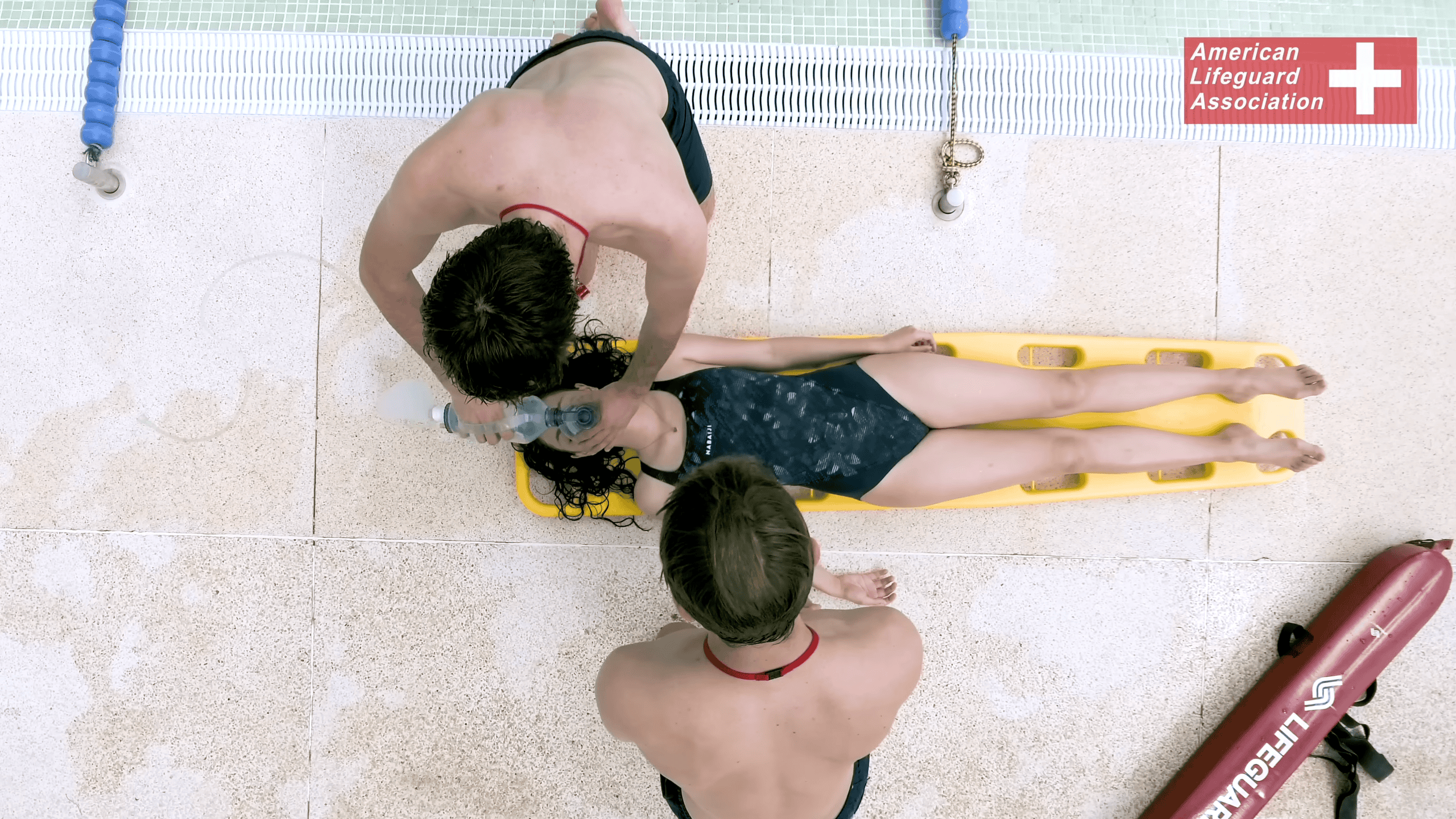
Two-Person Removal from the Water Using a Backboard
Passive Submerged Victim (Shallow Water)
Multiple-Victim Rescue
Feet-First Surface Dive
Submerged Victim (Deep Water)
Front and Rear Head-Hold Escape
Manual In-Line Stabilization for Head, Neck, or Back Injury on Land (Lying Down, Sitting, or Standing)
Using a Backboard for a Standing Victim on Land
Head Splint Technique (Face-Up Victim, Shallow Water at or Near Surface)
Head Splint Technique (Face-Down Victim, Shallow Water at or Near Surface)
Head and Chin Support (Face-Up Victim, Shallow Water at or Near Surface)
Head and Chin Support (Face-Down Victim, Shallow Water at or Near Surface)
Head Splint Technique (Face-Up Victim, Deep Water at or Near Surface)
Head Splint Technique (Face-Down Victim, Deep Water at or Near Surface)
Head and Chin Support (Face-Up Victim, Deep Water at or Near Surface)
In-Line Stabilization for a Submerged Victim (Face-Up, Face-Down, or One Side in Deep Water)
Using a Backboard in Shallow and Deep Water
Removing Gloves
Initial Assessment
Rescue Breathing (Adult, Child, and Infant)
Using a Bag-Valve-Mask Resuscitator (Two Rescuers)
Conscious Choking (Adult, Child, and Infant)
Unconscious Choking (Adult, Child, and Infant)
CPR (Adult, Child, and Infant)
Two-Rescuer CPR (Adult, Child, and Infant)
Using an AED (Adult and Child)
Secondary Assessment
Controlling External Bleeding
Applying a Sling and Binder
Applying an Anatomic Splint
Applying a Soft Splint
Final Skill Scenario 1 – Active Drowning Victim
Final Skill Scenario 2 – Submerged Passive Drowning Victim
Final Skill Scenario 3 – Head, Neck, or Back Injury
The main purpose of lifeguard education is to ensure that every swimmer remains protected within the lifeguard’s assigned area. To maintain clear visibility, lifeguards often monitor from elevated chairs at pools or beaches. In larger waterfront environments, they may patrol actively across the zone. Binoculars and rescue equipment are commonly used tools for first responders in open areas.
The American Lifeguard Association is regarded as one of the leading aquatic safety and health training providers in the Early County. With more than 30 years of experience, ALA follows a strict code of ethics and remains committed to delivering high-quality safety training worldwide.
For Lifeguard class in Early County, if you are searching online for “lifeguard training near me,” the American Lifeguard Association is a strong choice for professional training and certification. For more information about ALA lifeguard programs and certifications, please contact us.