
If you often visit the beach or a swimming pool, you have probably noticed that there is always one or more lifeguards present to protect everyone’s safety. A lifeguard’s main responsibility is to help prevent accidents and respond when emergencies happen, which is why proper training is required. Lifeguard class in Burke County is designed for this purpose—preparing individuals to work as lifeguards and help protect swimmers at beaches, lakes, water parks, and swimming pools.
Burke County offers plenty of places where people enjoy swimming, from community pools and recreation centers to nearby lakes and seasonal water attractions. Swimming is one of the most enjoyable ways to stay active and cool off, especially during warmer months. With so many families and visitors spending time in and around the water, having trained lifeguards on duty becomes essential. Lifeguards help supervise swimmers, prevent accidents, and respond quickly when emergencies happen. That’s why the demand for certified lifeguards in Burke County increases during peak swim seasons and remains important year-round at indoor aquatic facilities.
Lifeguards work at beaches, water parks, lakes, and swimming pools to protect swimmers and maintain safe aquatic environments. There are many water recreation opportunities across the U.S., and the same applies in Burke County, where aquatic facilities and swimming areas require trained lifeguards to help keep visitors safe.
Lifeguard class in Burke County is the starting point for anyone who wants to build a strong opportunity in the aquatic field. After earning a lifeguard certification through a recognized organization like the American Lifeguard Association (ALA), you can qualify for many lifeguard job options.
ALA training centers offer multiple programs and lifeguard certifications. Lifeguard class in Burke County is especially popular in the summer months, but it can be beneficial year-round because indoor pools and aquatic programs continue throughout the year.
Having an ALA lifeguard certification can support your job search at pools, waterparks, and waterfront locations because of the organization’s reputation. ALA has been educating lifeguards for more than 30 years and has trained professionals who serve communities worldwide.
Lifeguard instruction provided by the American Lifeguard Association includes a wide range of essential skills you must learn.
The American Lifeguard Association (ALA) is supported by Global Lifeguards and the Swimming Pool and Spa Foundation, which are 501(c)(3) nonprofit associations focused on aquatic safety. ALA’s mission is to help reduce drownings and improve safety at pools, beaches, and waterways. ALA also collaborates with employers nationwide to train lifeguard professionals.
ALA has been listed over the years on the CDC Healthy Swimming website. Additionally, the U.S. Department of Labor and the U.S. General Service Administration (GSA) have determined that ALA provides lifeguard certification programs comparable to those offered by the American Red Cross. Since the early 1990s, ALA has also worked to ensure training programs meet Occupational Safety and Health Administration (OSHA) requirements for employees.
ALA program skills reflect ECC science and the findings from the Burke County Lifeguard Training Standards Coalition Report. ALA programs also require employers to meet Model Aquatic Health Code (MAHC) recommendations, including pre-service evaluations and ongoing in-service training for staff.
Before we list the skills, let’s review what you need in order to qualify as a participant in an ALA lifeguard class.
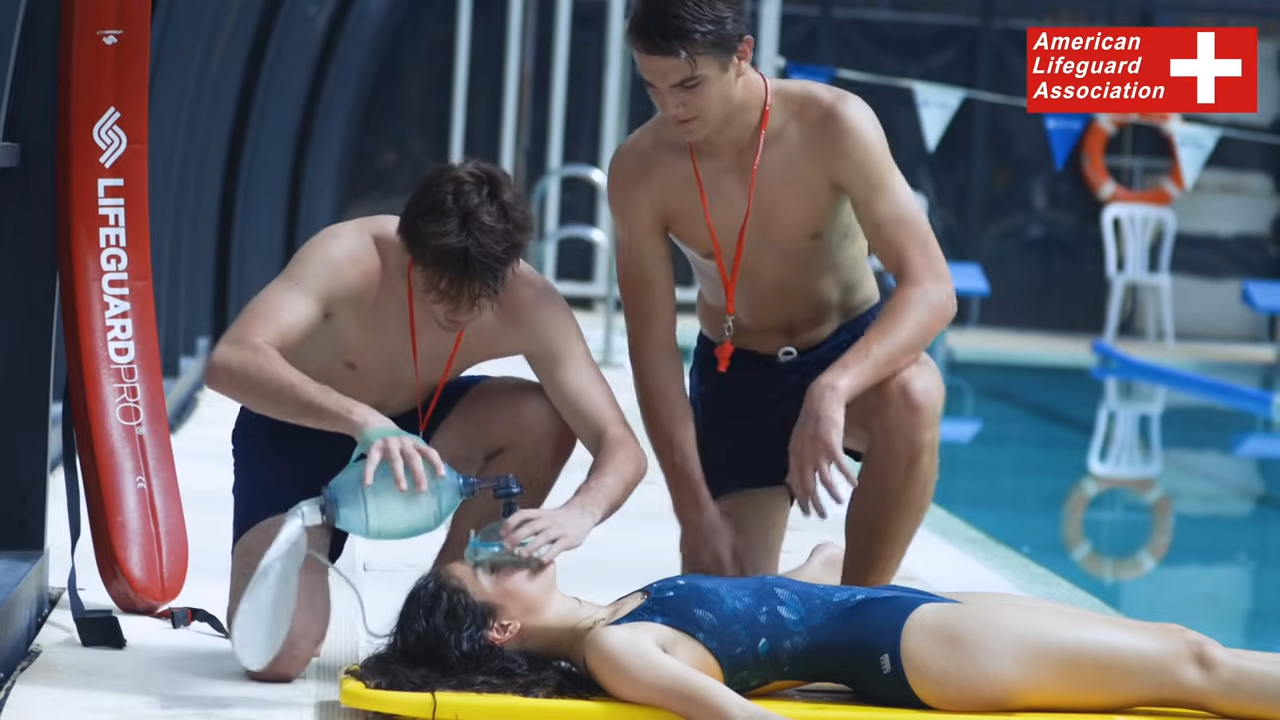
To join the Lifeguarding course, U.S. Labor Laws require that you must be 15 years or older to work at a swimming pool, waterpark, or lake, and 16 years or older to work at beaches.
You must successfully demonstrate the following skills to complete the Lifeguarding course:
Swim 300 yards continuously, using these strokes in the following order:
100 yards of front crawl using rhythmic breathing and a stabilizing, propellant kick. Rhythmic breathing may be performed by breathing to the side or to the front.
100 yards of breaststroke using a pull, breath, kick and glide sequence.
100 yards of either the front crawl or breaststroke.
The final 100 yards may be a combination of front crawl and breaststroke.
Timed skill test:
Starting in the water, swim 20 yards using front crawl or breaststroke, surface dive 7–10 feet, retrieve a 10-pound object, return to the surface, swim 20 yards back to the starting point with the object, and exit the water without using a ladder or steps, within 1 minute, 40 seconds.
After completing the course, each participant receives an American Lifeguard Certificate indicating Lifeguard, CPR/AED for the Professional Rescuer, and First Aid, valid for two years.
Many people consider lifeguarding a seasonal summer job, especially for students, because it is often busiest in warmer months. However, lifeguarding can also become a long-term career path.
A smart way to gain more from your lifeguard class in Burke County is to work at facilities that need lifeguards year-round. With added education and experience, a lifeguard can grow into roles such as a water safety instructor or coach—positions that often pay more than standard lifeguard work.
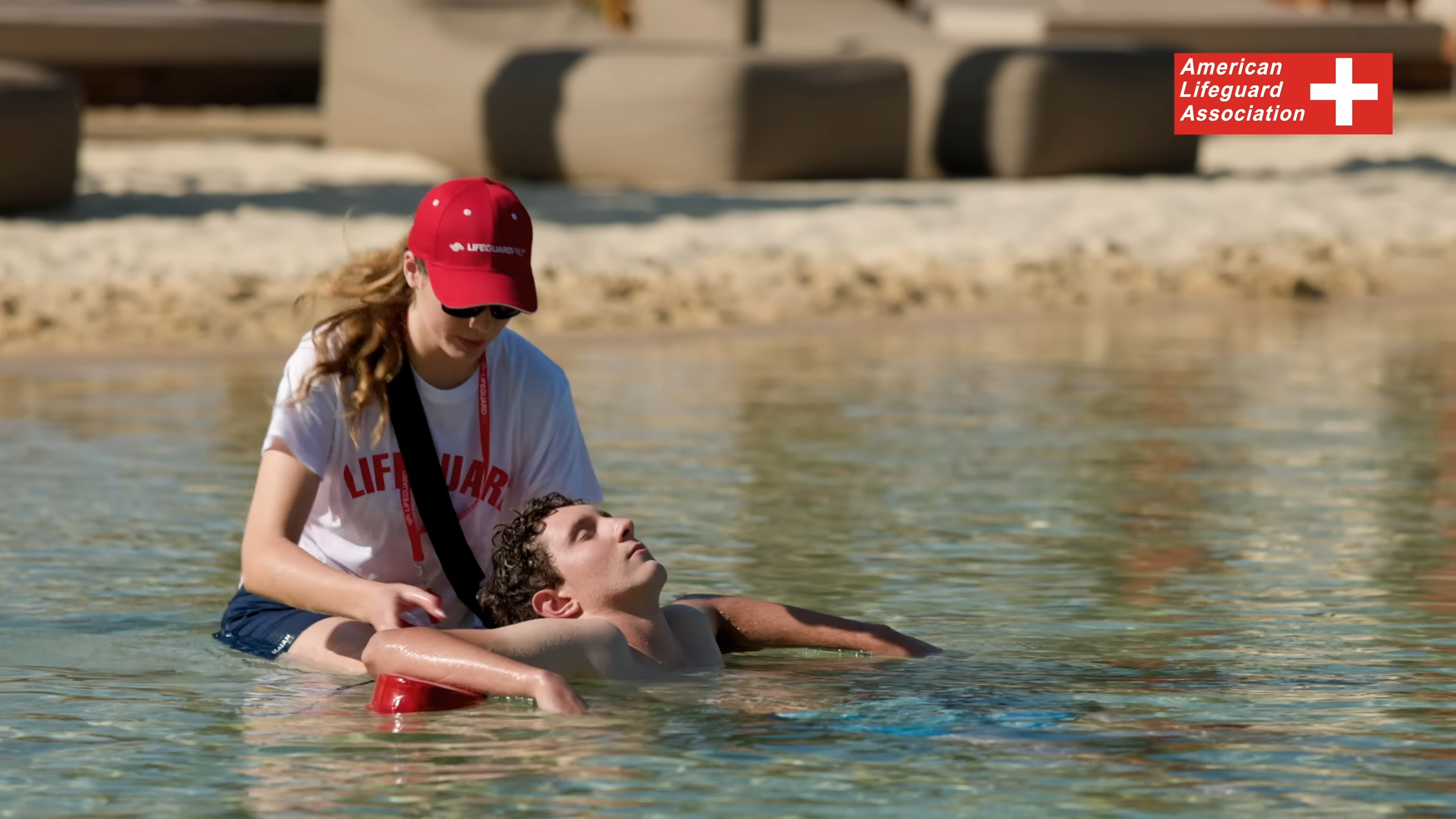
Participants in the American Lifeguard Association Lifeguarding course will learn:
Slide-In Entry
Stride and Compact Jumps
Rescue Approach–Front Crawl or Breaststroke
Simple Assist
Extension Assist from the Deck
Reaching Assist with Equipment and Throwing Assist
Swimming Extension Rescue
Active and Passive Drowning Victim Rear Rescue
Two-Person Removal from the Water Using a Backboard
Passive Submerged Victim–Shallow Water
Multiple-Victim Rescue
Feet-First Surface Dive
Submerged Victim–Deep Water
Front and Rear Head-Hold Escape
Manual In-Line Stabilization for a Head, Neck, or Back Injury on Land–Lying Down, Sitting, or Standing
Using a Backboard for a Standing Victim on Land
Head Splint Technique–Face-Up Victim, Shallow Water at or Near Surface
Head Splint Technique–Face-Down Victim, Shallow Water at or Near Surface
Head and Chin Support–Face-Up Victim, Shallow Water at or Near Surface
Head and Chin Support–Face-Down Victim, Shallow Water at or Near Surface
Head Splint Technique–Face-Up Victim, Deep Water at or Near Surface
Head Splint Technique–Face-Down Victim, Deep Water at or Near Surface
Head and Chin Support–Face-Up Victim, Deep Water at or Near Surface
In-Line Stabilization for a Submerged Victim–Face-Up, Face-Down, or on One Side in Deep Water
Using a Backboard in Shallow and Deep Water
Removing Gloves
Initial Assessment
Rescue Breathing–Adult, Child, and Infant
Using a Bag-Valve-Mask Resuscitator–Two Rescuers
Conscious Choking–Adult, Child, and Infant
Unconscious Choking–Adult, Child, and Infant
CPR–Adult, Child, and Infant
Two-Rescuer CPR–Adult, Child, and Infant
Using an AED–Adult and Child
Secondary Assessment
Controlling External Bleeding
Applying a Sling and Binder
Applying an Anatomic Splint
Applying a Soft Splint
Final Skill Scenario 1–Active Drowning Victim
Final Skill Scenario 2–Submerged Passive Drowning Victim
Final Skill Scenario 3–Head, Neck, or Back Injury
The main goal of lifeguard instruction is to ensure that every swimmer in the assigned area remains safe. To keep a clear view of their zone, lifeguards often sit in an elevated chair overlooking the pool deck or shoreline. In large open-water environments, lifeguards may patrol the area, and binoculars are commonly used by first responders.
The American Lifeguard Association is considered one of the leading aquatic health and safety training providers in the Burke County. With more than 30 years of experience, ALA delivers training based on ethics, safety, and quality standards worldwide.
For lifeguard class in Burke County, if you are searching for the phrase “lifeguard training near me,” the American Lifeguard Association is a strong choice for lifeguard class in Burke County. For more information about ALA lifeguard certification programs, please feel free to contact us.