
If you visit the beaches or natural swimming spots around Pitcairn Island, you’ll notice the importance of water safety in such a remote and ocean-surrounded environment. The lifeguard’s essential role is to prevent accidents and respond swiftly to emergencies, which requires specialized, professional training.
Lifeguard training in Pitcairn Island fulfills this need by preparing individuals to protect swimmers in coastal areas, coves, and local recreational zones. Though small in population, Pitcairn’s rugged coastline and deep Pacific waters make safety skills vital for both residents and visitors.
With limited access to emergency resources on the island, having certified lifeguards ensures faster response times and greater overall community protection.
Lifeguards play a crucial role in the safety and sustainability of island life. From ocean swimming areas to community recreation sites, their presence provides peace of mind.
Lifeguard training in Pitcairn Island, provided through the American Lifeguard Association (ALA), prepares individuals with life-saving techniques suited for both open-water and pool environments.
Once certified, candidates can serve locally or use their international certification to seek employment abroad in resorts, cruise lines, or coastal facilities. ALA’s global reputation ensures that trained lifeguards from Pitcairn Island are recognized for their professionalism and commitment to aquatic safety.
The American Lifeguard Association (ALA) is an internationally respected organization supported by Global Lifeguards and the Swimming Pool and Spa Foundation, both nonprofit organizations devoted to improving water safety and reducing drownings.
ALA’s mission is to make beaches, pools, and aquatic areas safer by partnering with global communities, including island nations like Pitcairn, to provide world-class lifeguard training.
The organization has been referenced by several health and safety authorities, such as:
And ECC science, ensuring trainees gain the most current rescue and first-aid knowledge.
To enroll in ALA Lifeguard Training in Pitcairn Island, candidates must meet these prerequisites:
Upon successful completion, each participant receives an ALA Certificate in Lifeguarding, CPR/AED for the Professional Rescuer, and First Aid, valid for two years.
While many see lifeguarding as a volunteer or community safety role, it can also develop into a long-term aquatic profession.
Certified lifeguards in Pitcairn can work at local swimming areas or apply their ALA international certification to pursue employment abroad in neighboring Pacific islands, resorts, or cruise ships.
Advanced roles include:
These positions offer rewarding opportunities for leadership, travel, and contribution to global water safety initiatives.
The ALA Lifeguard Course equips participants with a complete set of practical rescue and emergency management skills, including:
Would you like to read about: Lifeguard Training in French Polynesia
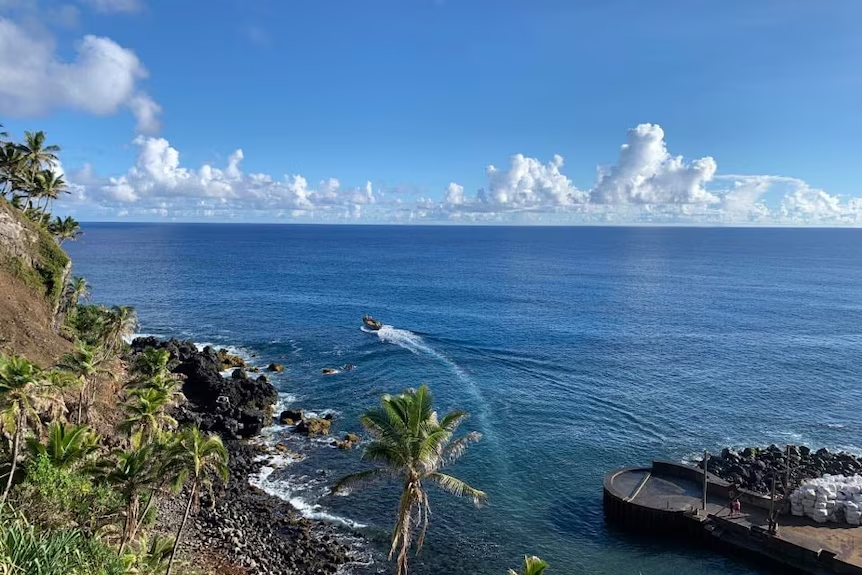
Though small, Pitcairn Island offers unique and scenic coastal areas where safety is critical:
Each of these spots highlights the importance of lifeguard readiness in remote island environments where immediate medical help is limited.
The goal of lifeguard training in Pitcairn Island is to empower individuals to safeguard their community and visitors alike. Lifeguards are not just rescuers; they are educators, safety leaders, and protectors of life.
With over 30 years of international experience, the American Lifeguard Association (ALA) continues to set the global standard for aquatic training and certification.
If you’re based in Pitcairn Island and searching for “lifeguard training near me,” the American Lifeguard Association provides the ideal pathway to earn globally recognized credentials and make a difference in your island community.